¶ Introduction
This article lists various adaptive equipment related to preparing and eating food.
¶ 3D-Printed Aids
3D-printed aids are small tools produced in limited quantities using 3D printers. There is a wide variety of adaptive equipment that can be created with this technology.
While 3D-printed parts can be highly useful, caution is required when they are used around food and drink. The layered manufacturing process often means the parts are quite porous, making them prone to absorbing liquids and harboring bacteria. As a result, they are difficult to clean effectively.
For this reason, 3D-printed parts should not be used in direct contact with food or beverages. Instead, their use should be limited to items such as cup holders, positioning devices, and similar accessories.
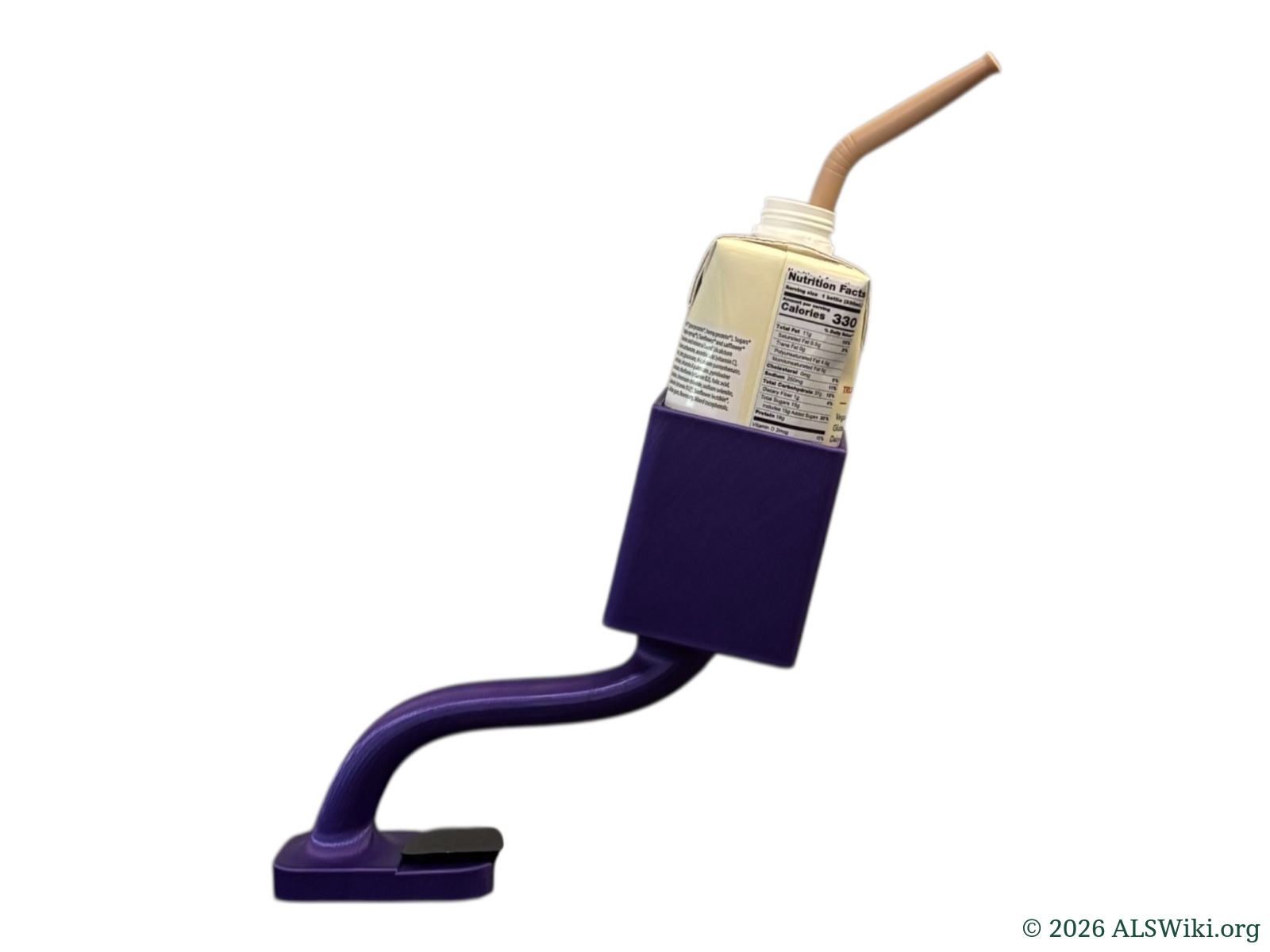
A custom 3D-printed cupholder for mounting to the edge of a table. The part does not come in contact with the drink.
¶ Bottle and Jar Openers
Bottle and jar openers are intended to make opening jars and bottles easier by providing some level of mechanical advantage. Various designs exist; some rely on retaining some amount of grip strength to be useful.
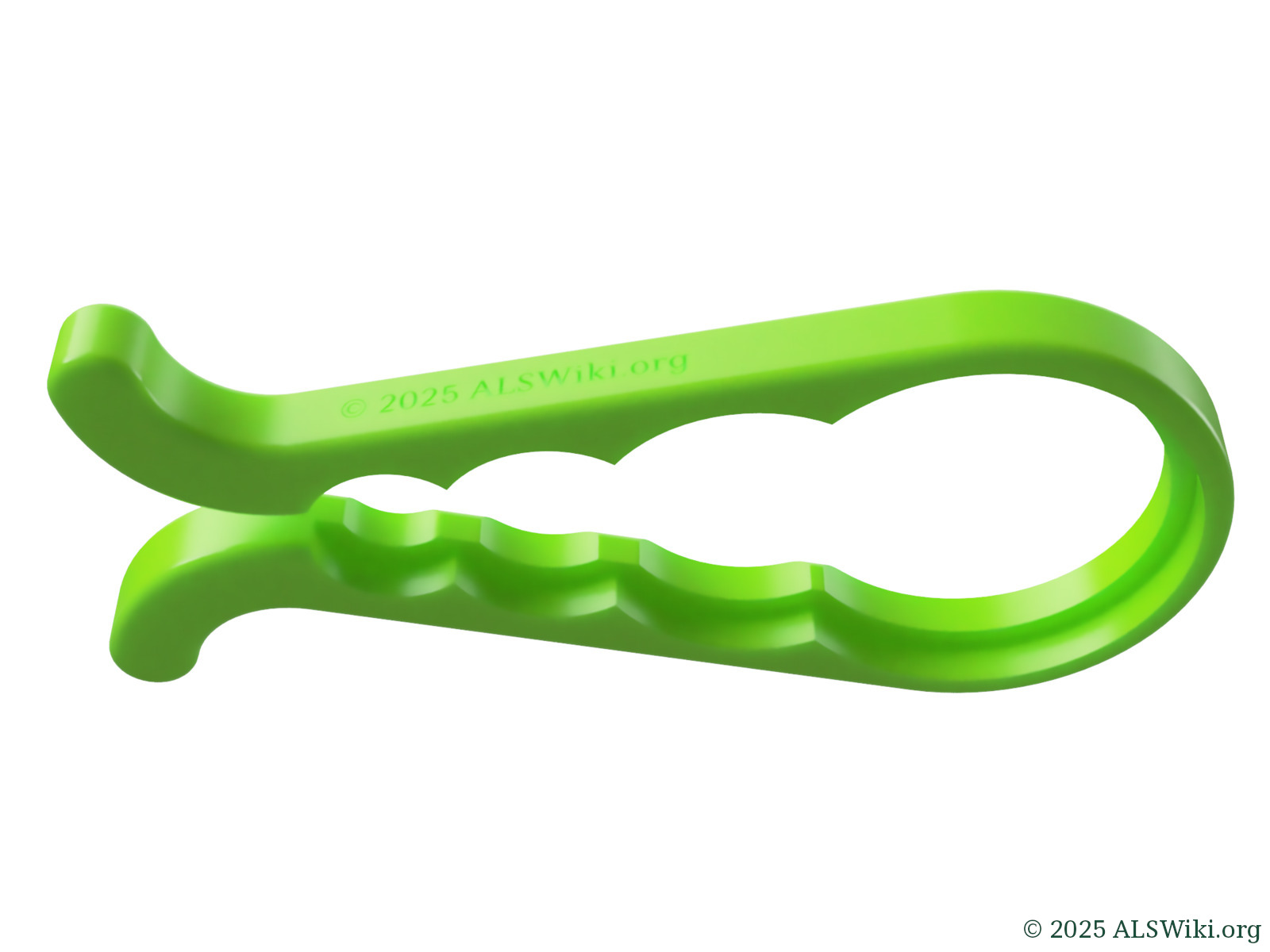
A hairpin-style jar opener, as seen above, requires adequate grip strength to be able to operate it.
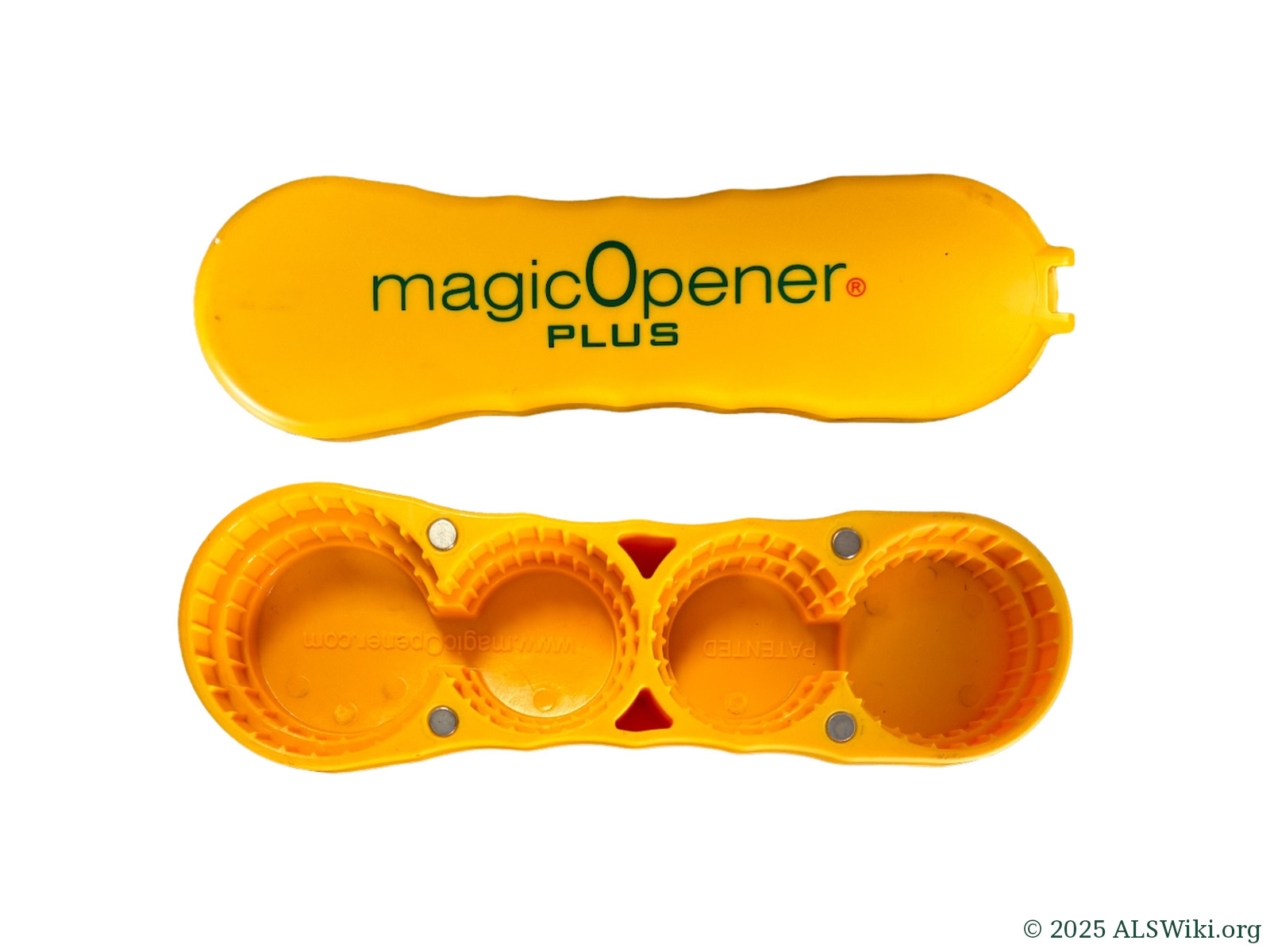
A "Magic Opener" which can help open bottles by being placed over top of the bottle cap.
¶ Feeding Machines
Feeding machines are high-tech, robotic devices intended to convey food from a plate or bowl to the users's mouth.
Feeding machines allow the user to eat their meal independently, as long as they do not require supervision due to elevated choking risk.
Successful use of a feeding machine still requires an assistant, as the bowl or plate must have prepared food on it. The feeding machine must also be cleaned after each use.
¶ Foam Grips
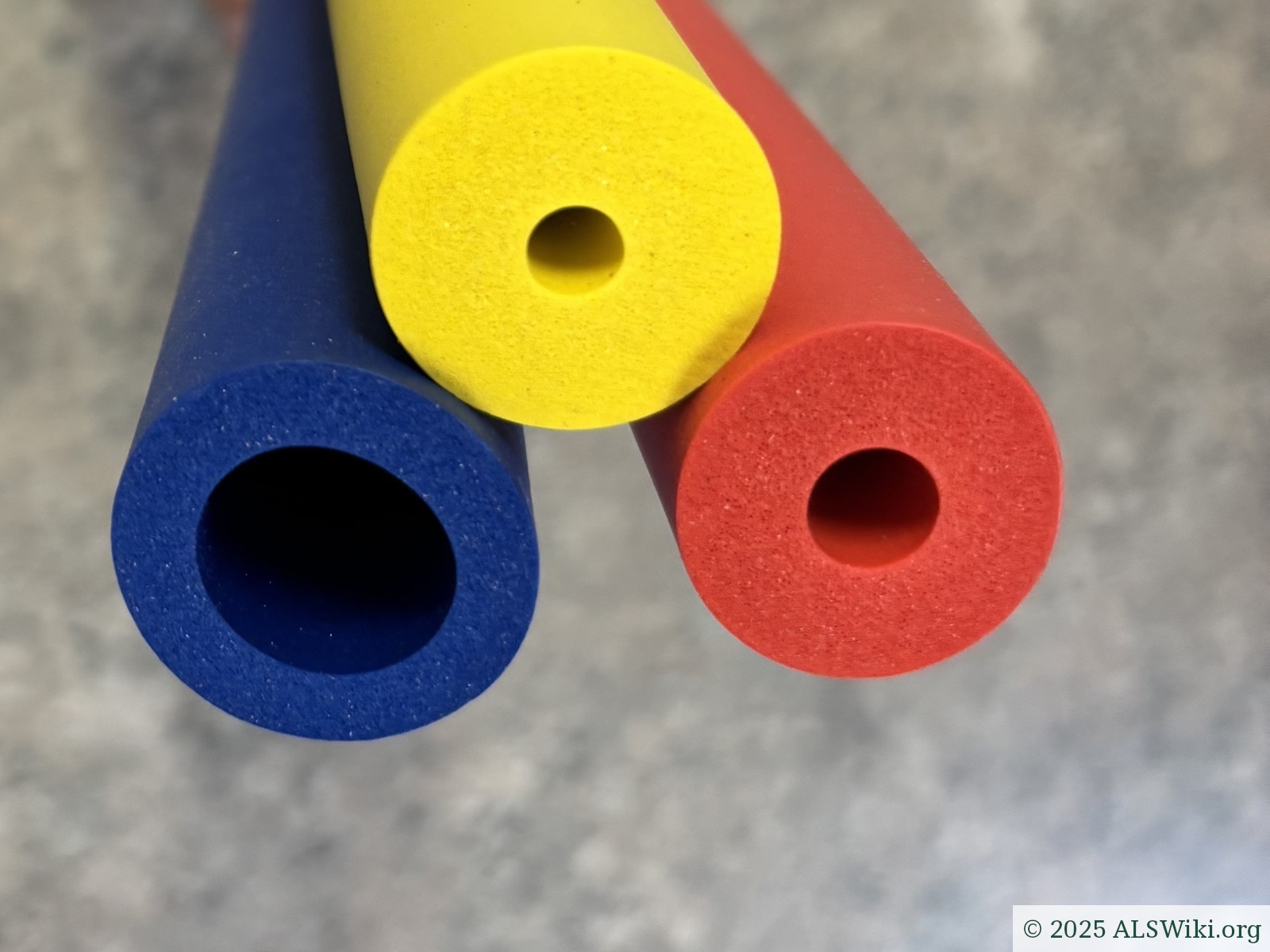
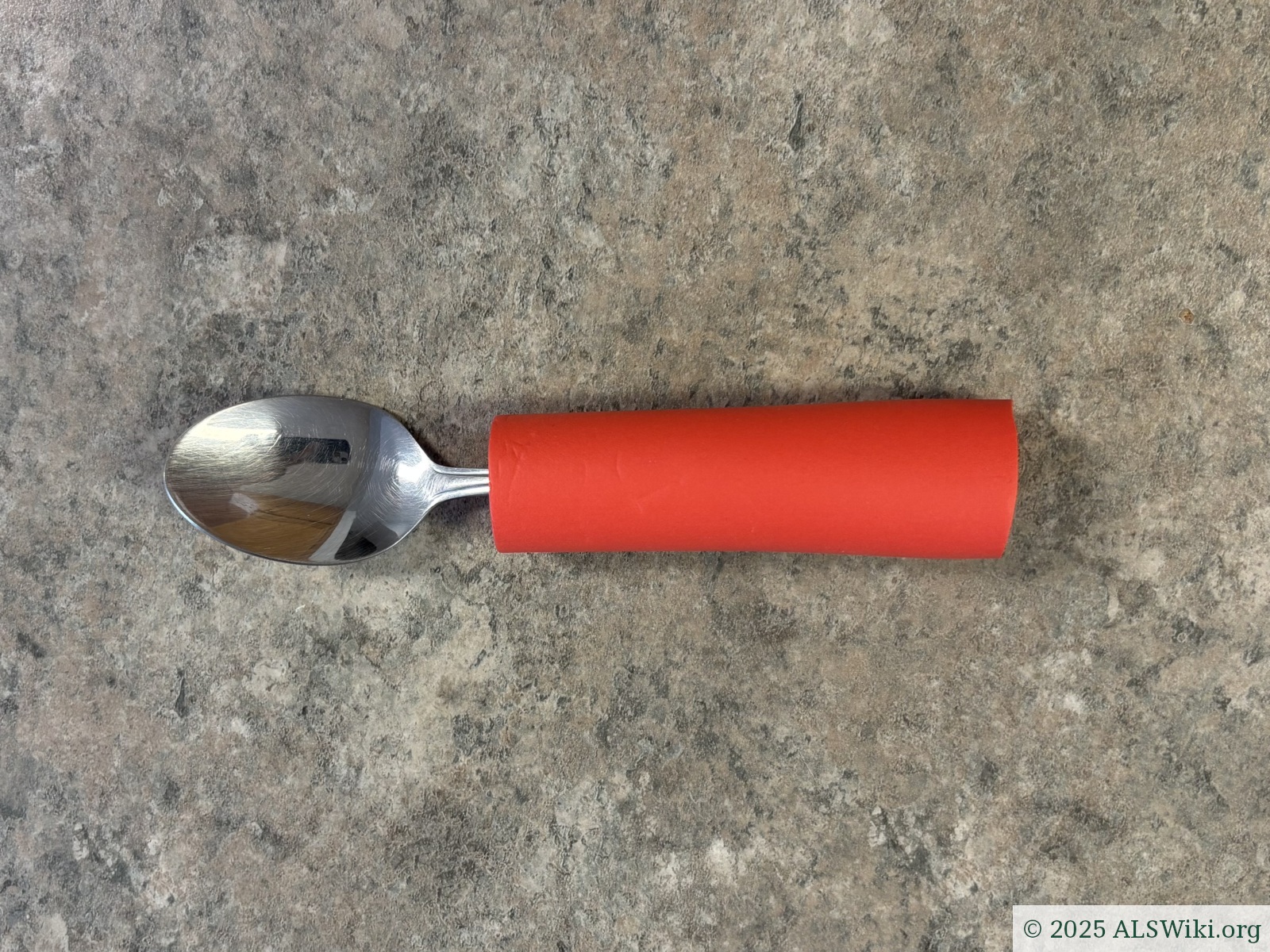
Foam grips are cushioned sleeves that are put over objects to make them easier to hold. Different inner and outer diameters are available, depending on the user's need.
¶ Cups and Mugs
Various cups and mugs exist to aid those with difficulties with their hands. Many involve the use of an integrated straw so that lifting the cup is not necessary.
Two-handed drinking cups offer the ability to continue raising the cup to drink from it. The second handle means that alternative methods can be used to stabilize it, such as pulling gently on each handle in equal opposition. However, these cups should not be used for hot drinks, or where spillage could cause a serious issue such as getting important electronics wet.
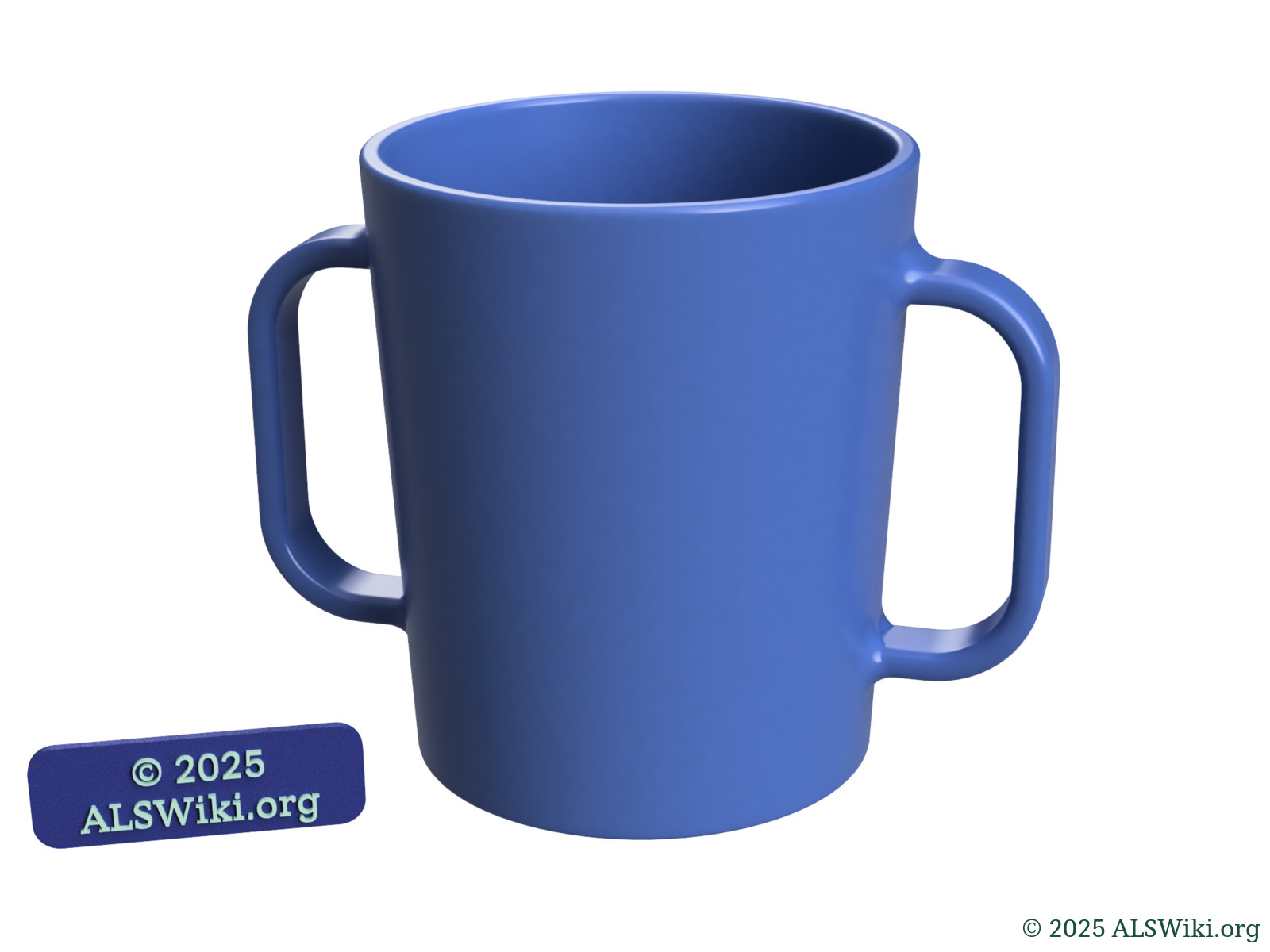
Drinking cup with two handles.
¶ Scoop Plates and Scoop Bowls
Scoop Plates are plates with a special shape that allows scooping up food with a spoon or fork, without needing to use a second utensil, such as a knife, as a stopper. Instead, the high side of the scoop plate prevents food from falling off when the primary utensil is pushed against it. Some models, especially scoop bowls, have a high-grip bottom surface to prevent them from sliding across the table during use.
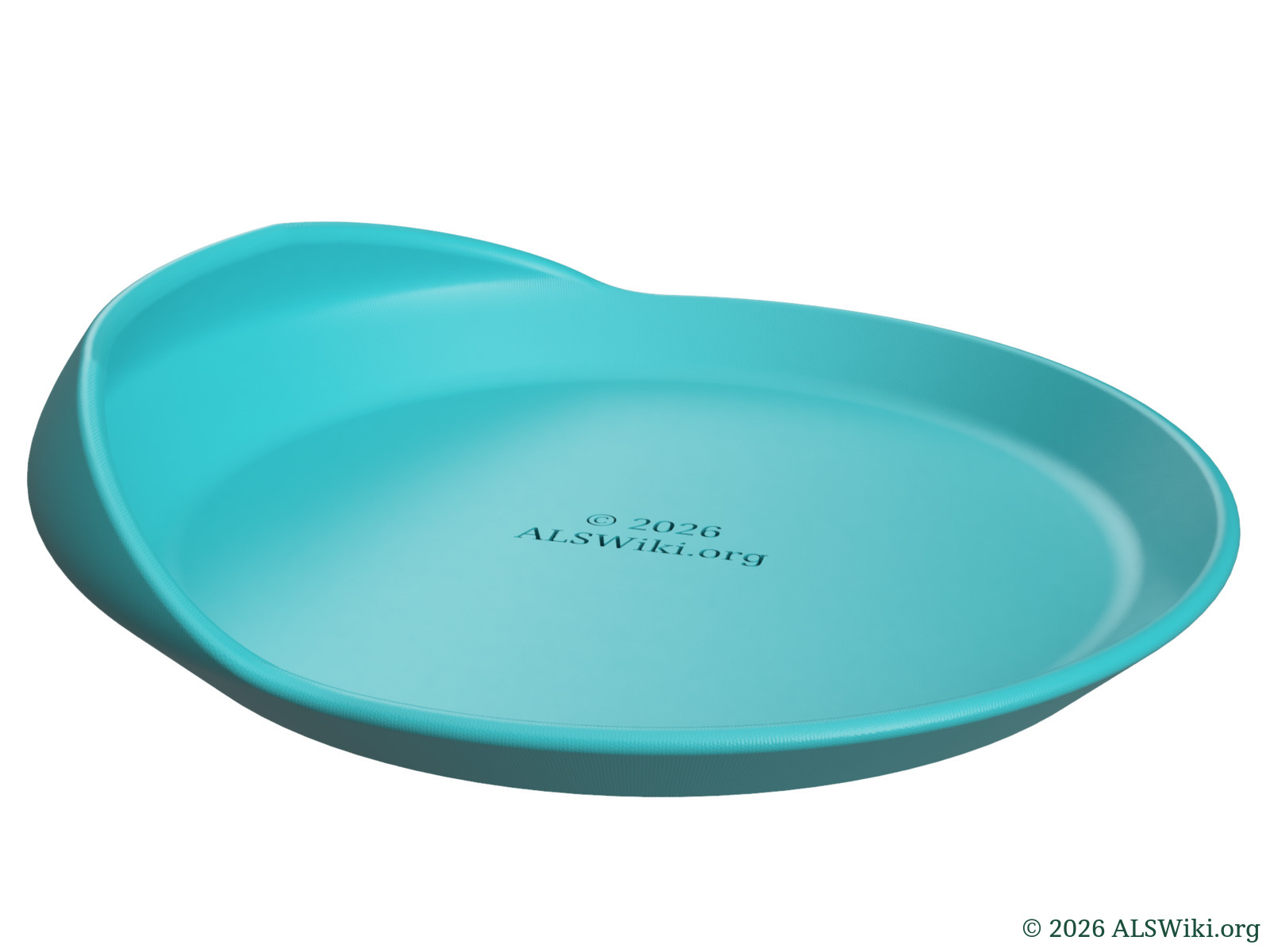
A scoop plate.
Add-on walls are also available, which make a conventional plate functionally equivalent to a scoop plate.
¶ Straws
Straws come in a variety of materials, each having their own advantages and disadvantages. The use of a straw removes the need to have to raise a cup to drink from it.
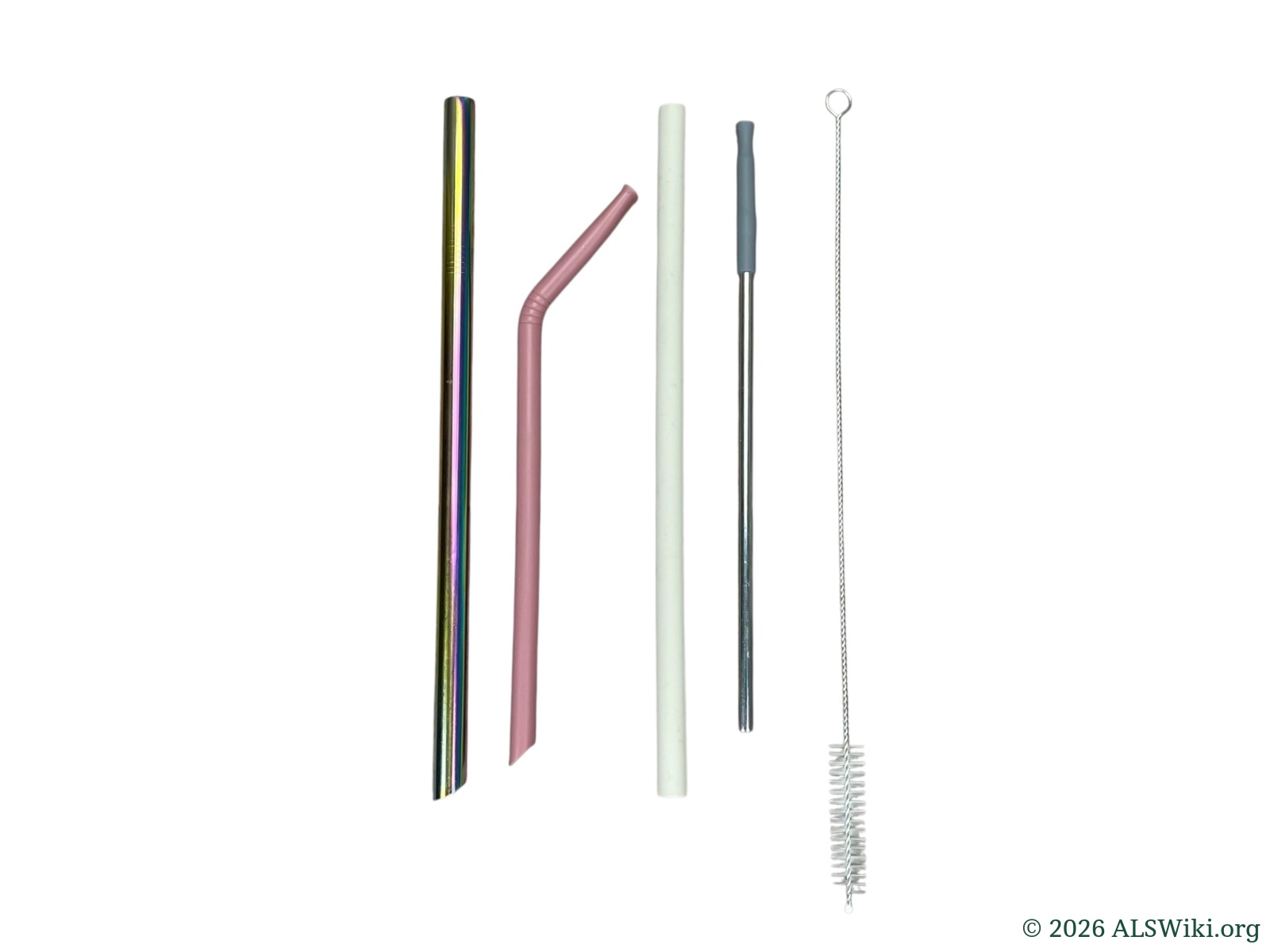
Various straws, and a straw cleaner.
| Table: comparison of different straw materials | ||
|---|---|---|
| Straw Material | Benefits | Drawbacks |
| Silicone |
|
|
| Metal |
|
|
| Plastic |
|
|
¶ Universal Cuffs
Universal cuffs are bands that are worn around the hand, and in some cases, the wrist. They are used to help hold a utensil without having to grip it. It is possible to use a utensil with a completely paralyzed hand with a universal cuff.
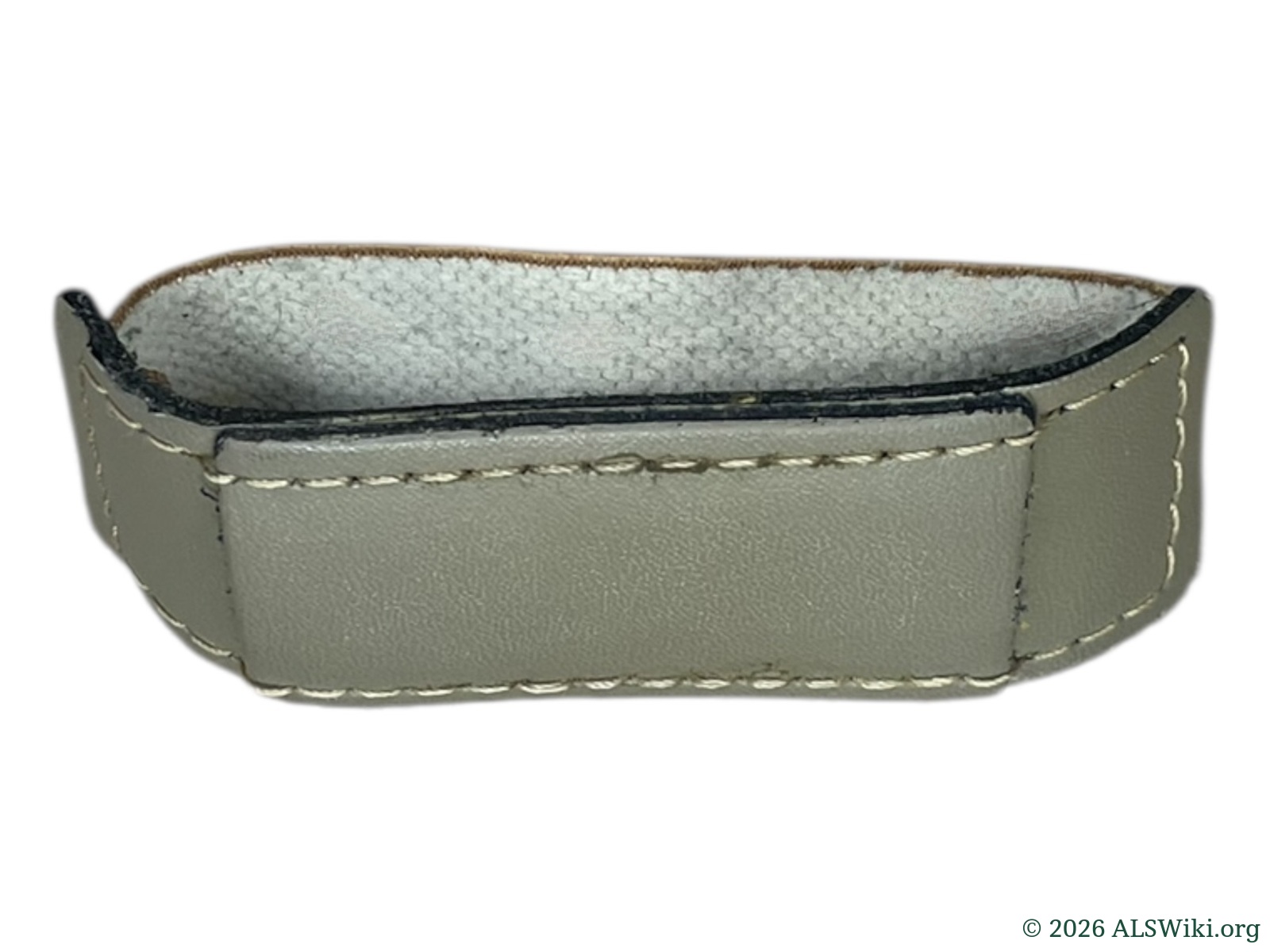
A universal cuff.
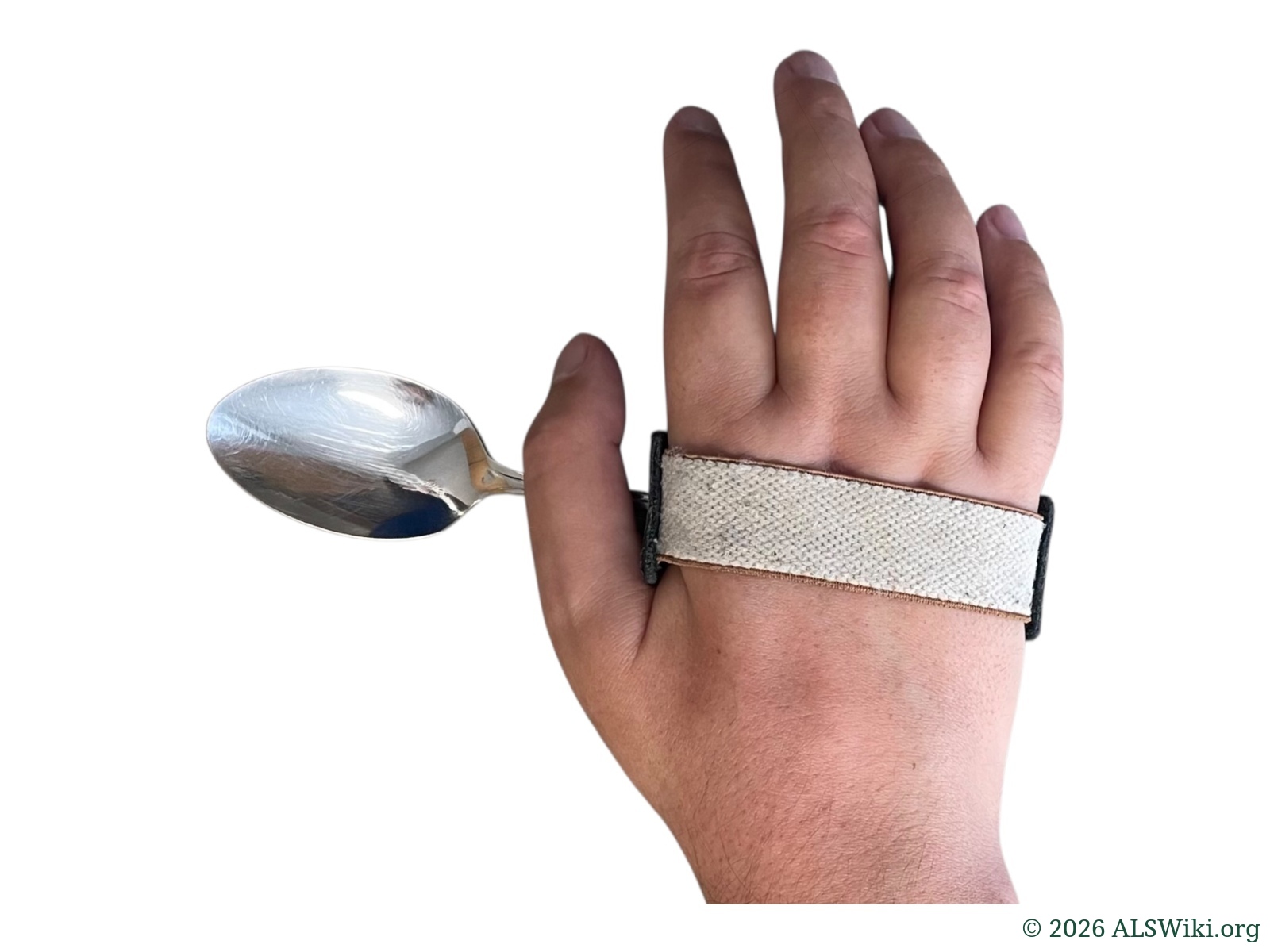
Top view of cuff fitted to hand.
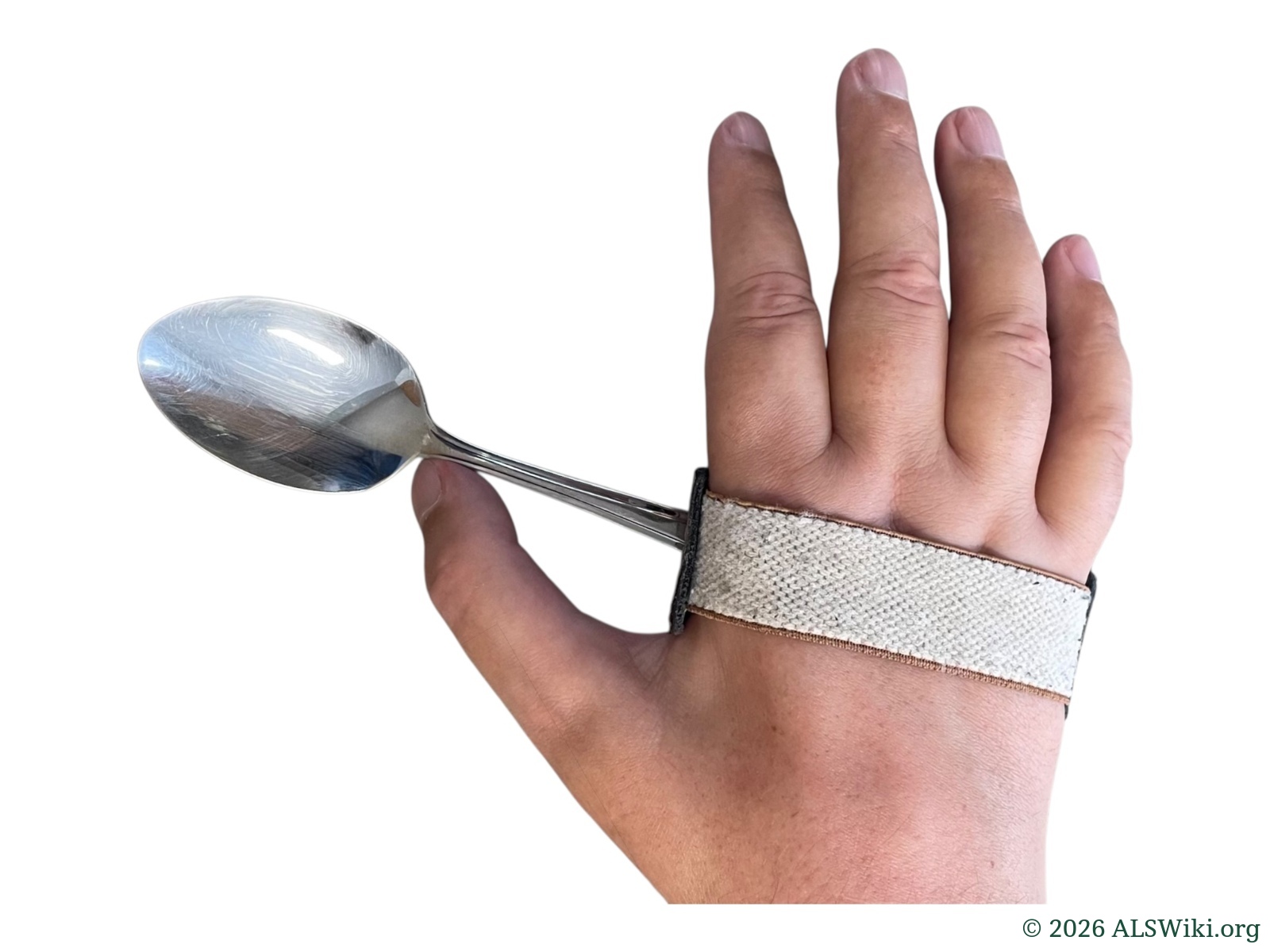
Top view of cuff fitted to hand, showing thumb becoming displaced during use.
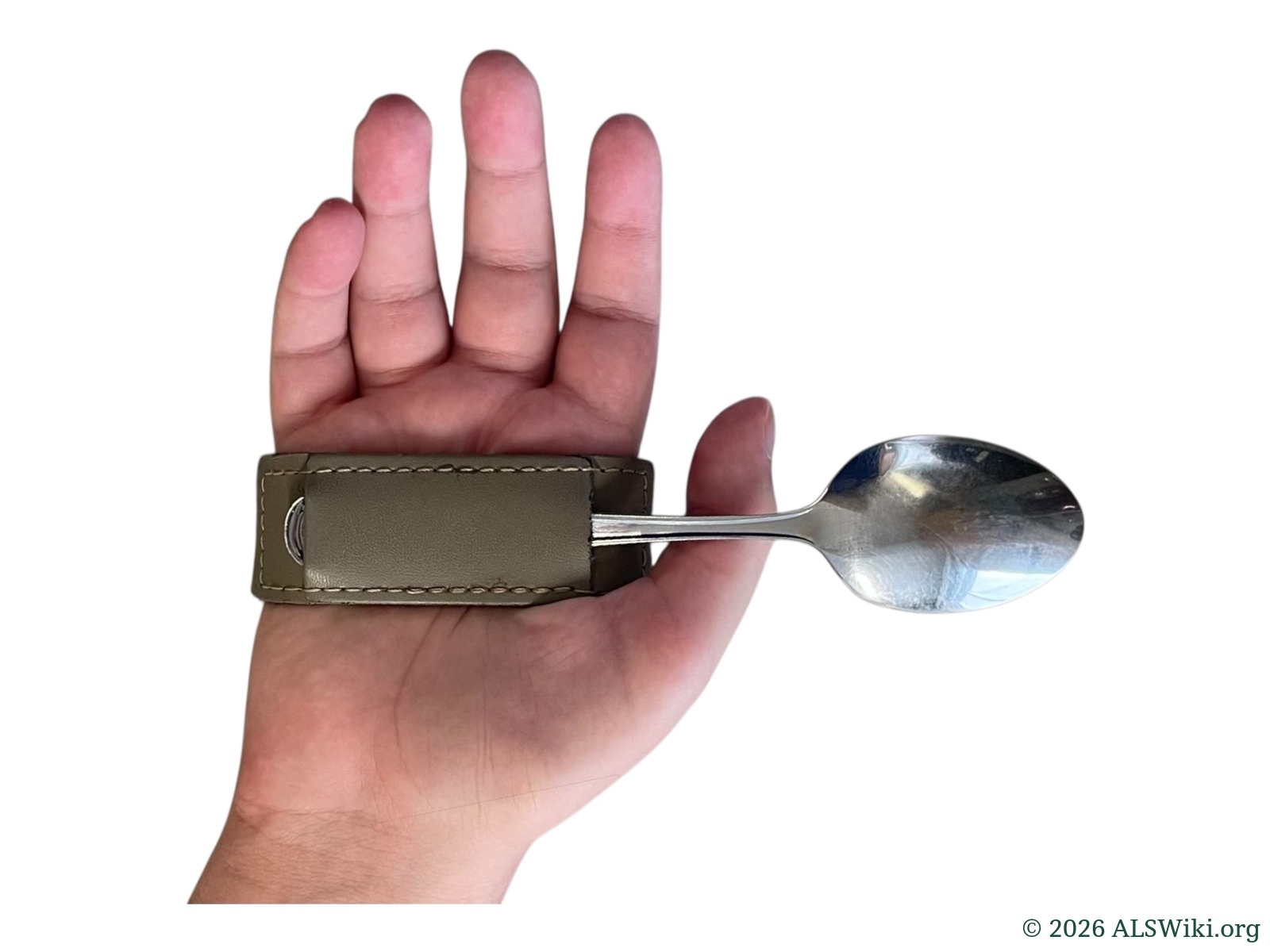
Bottom view of cuff fitted to hand.
¶ Over-Bed Trays
Over-bed trays are small tables that rest over top of the users's lap while lying in bed or sitting in a recliner. They can be used for eating or as a work surface without having to transfer to a table.
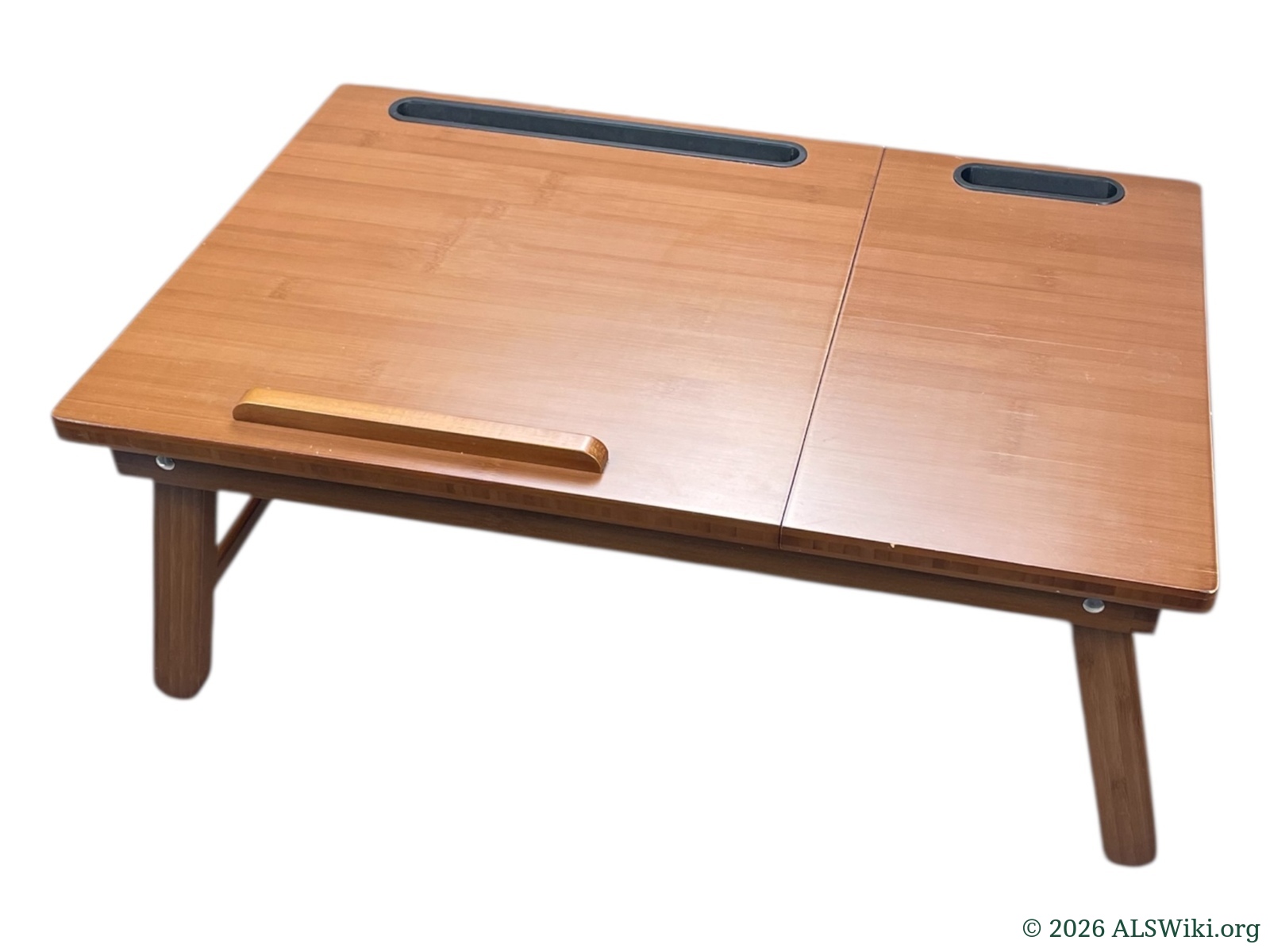
An over-bed tray with folding legs.