¶ Introduction
A commode chair is a type of toilet that collects human waste into a bucket or tray. Some commodes are intended to be used over a flush toilet where the waste will be deposited and thus do not have a collection mechanism of their own.
¶ Start using when…
Standing up from the toilet at its natural height is slightly difficult, but still possible

¶ Stop using when…
Light-duty commodes: Standing up from the commode is no longer possible without extreme adaptation
Wheeled tilt shower commodes with suitable supports: ∞
¶ Types
There are many different types of commode chairs, with the following being the most common:
- wheeled tilt shower commode chair: is able to get wet, has seat tilt functionality, and wheels for transport with or without a patient. Often equipped with a removable receptacle to collect waste, when not being used over a flush toilet. These are the most versatile commode chairs
- bedside commode chair: a freestanding commode chair, fitted with a removable receptacle to collect waste. Some models are equipped with arms; some arm support dropping out of the way to make room for a transfer board
- over-the-toilet commode chair: largely the same as a bedside commode chair; equipped with a splash guard in place of a waste collection receptacle
¶ Image Gallery
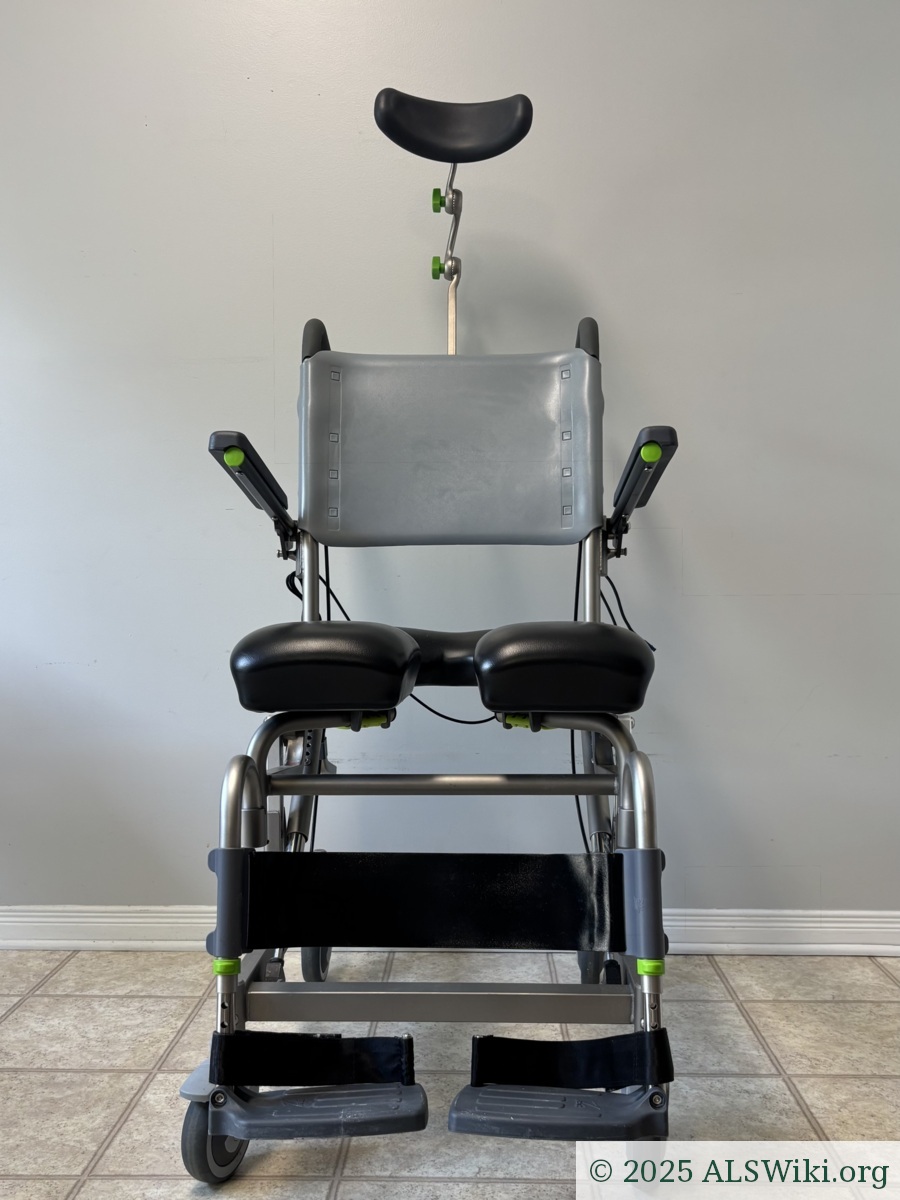
A wheeled tilt shower commode chair, front view.
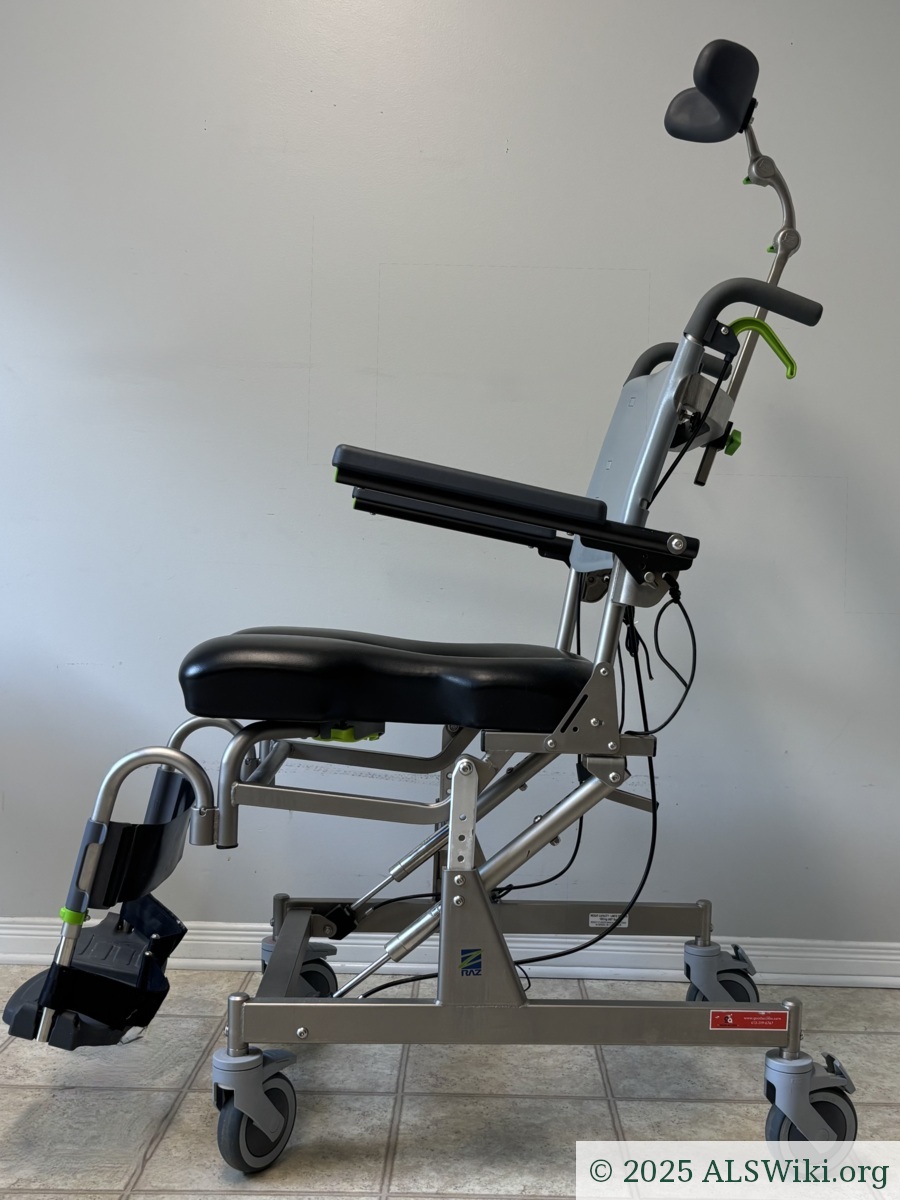
A wheeled tilt shower commode chair, side view, upright.
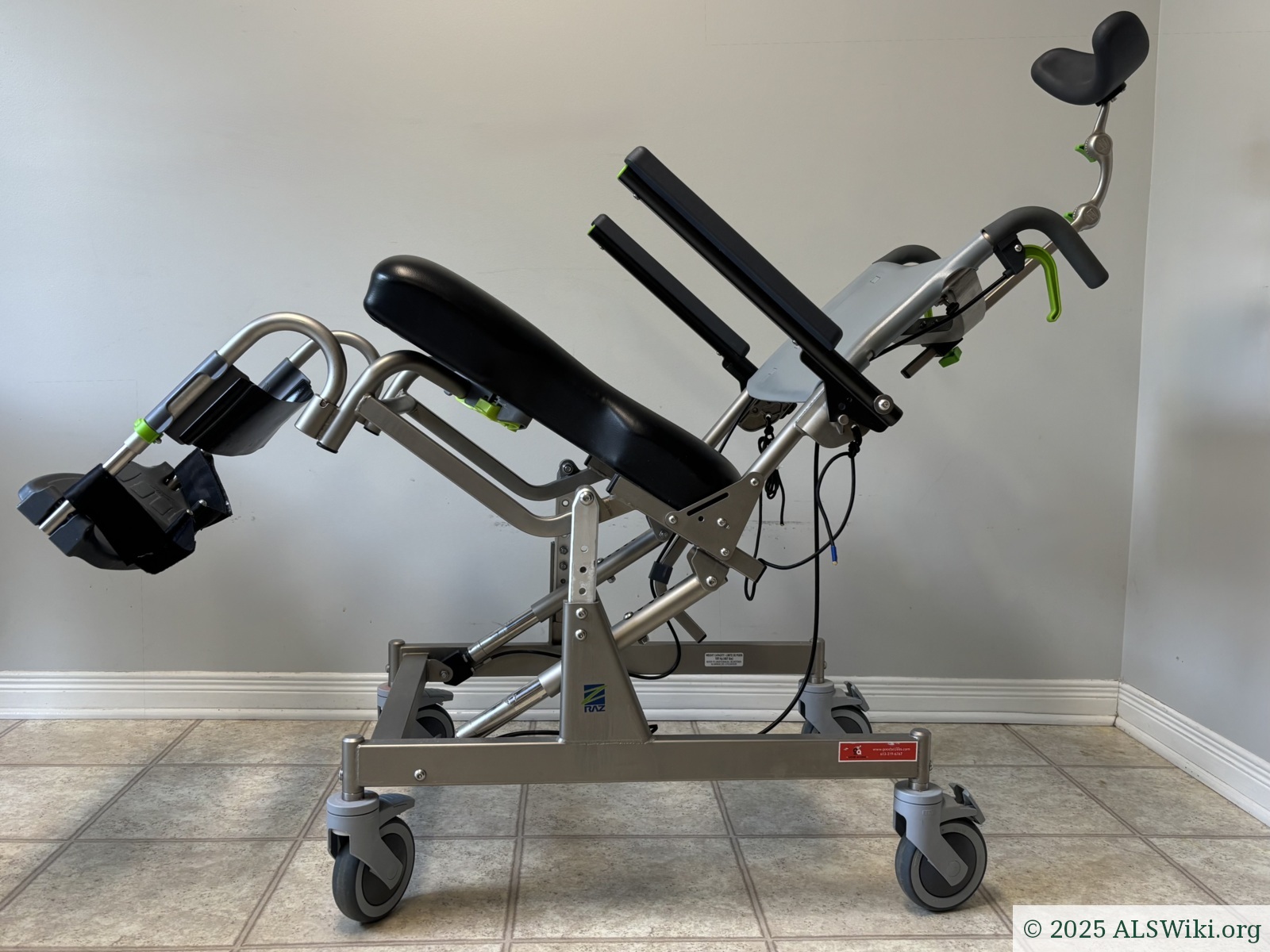
A wheeled tilt shower commode chair, side view, tilted back.

A wheeled commode chair, positioned over top of a flush toilet.
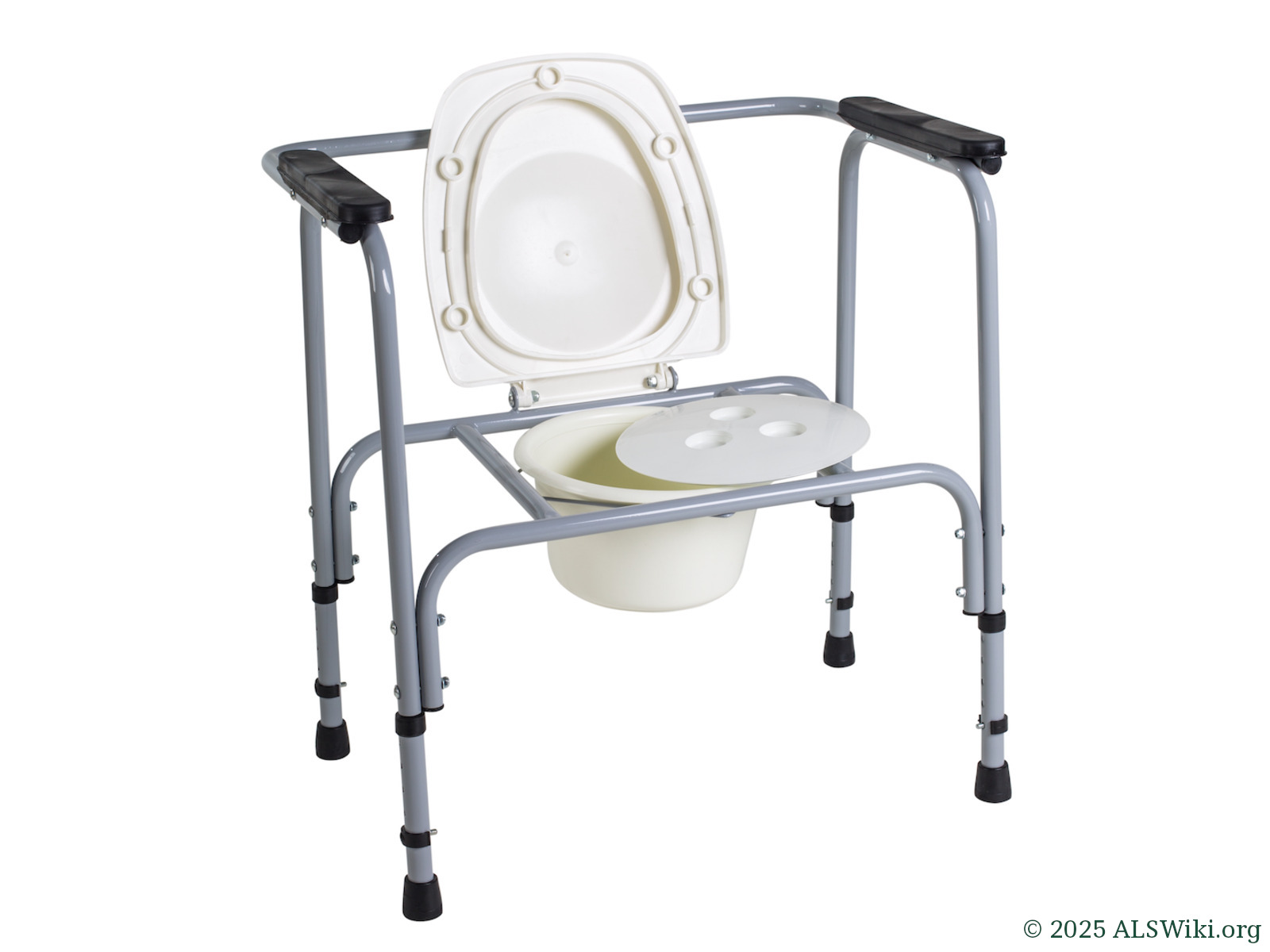
A bedside commode chair.
¶ Further Considerations
Commode chairs vary significantly in their versatility. Models with wheels, tilt functionality, and the ability to be used in wet environments such as a shower provide a great deal of utility for an ALS patient, including in the later stages of the disease when disability is significant. Simple bedside commode chairs on the other hand, are only suited for use in intermediate stages of the disease.
Commode chairs can be as cheap as $50, while high-end models with electric tilt functionality and other special features can cost upwards of $5000.

A low-cost commode chair with a broken weld after six months of light use.
Commode chairs of all types are prone to leaking urine at the front, especially when being used by a male patient.
Commode chairs typically have height-adjustable legs to account for the height of the patient. Taller patients may reach the limit of range quickly. Configuring the commode chair to be as high as possible is beneficial, however, the patient must be able to sit upon it safely.
Commode chairs are prone to moving when the patient sits down on it, or when they go to stand up, especially if the patient is applying significant pressure to the support bars with their arms. When the patient begins to stand up, the commode may tend to move or tilt backward; this may damage the tank of a flush toilet.
Wheeled commode chairs have levers on every wheel. Most are brakes, though one or more may be steering locks instead. If so, the lever on that wheel may have a different color or shape from the others. All brakes and steering locks should be activated before the patient uses the commode chair. Steering locks are useful as they make it easier to push the commode chair as if it were a wheelchair.