¶ Introduction
🚧
¶ Canes
A cane is used to provide additional stability while walking. They are gripped in the hand and act as a “third leg” to provide support while moving one of the other legs. Canes are affordable and readily available at pharmacies and other retailers.
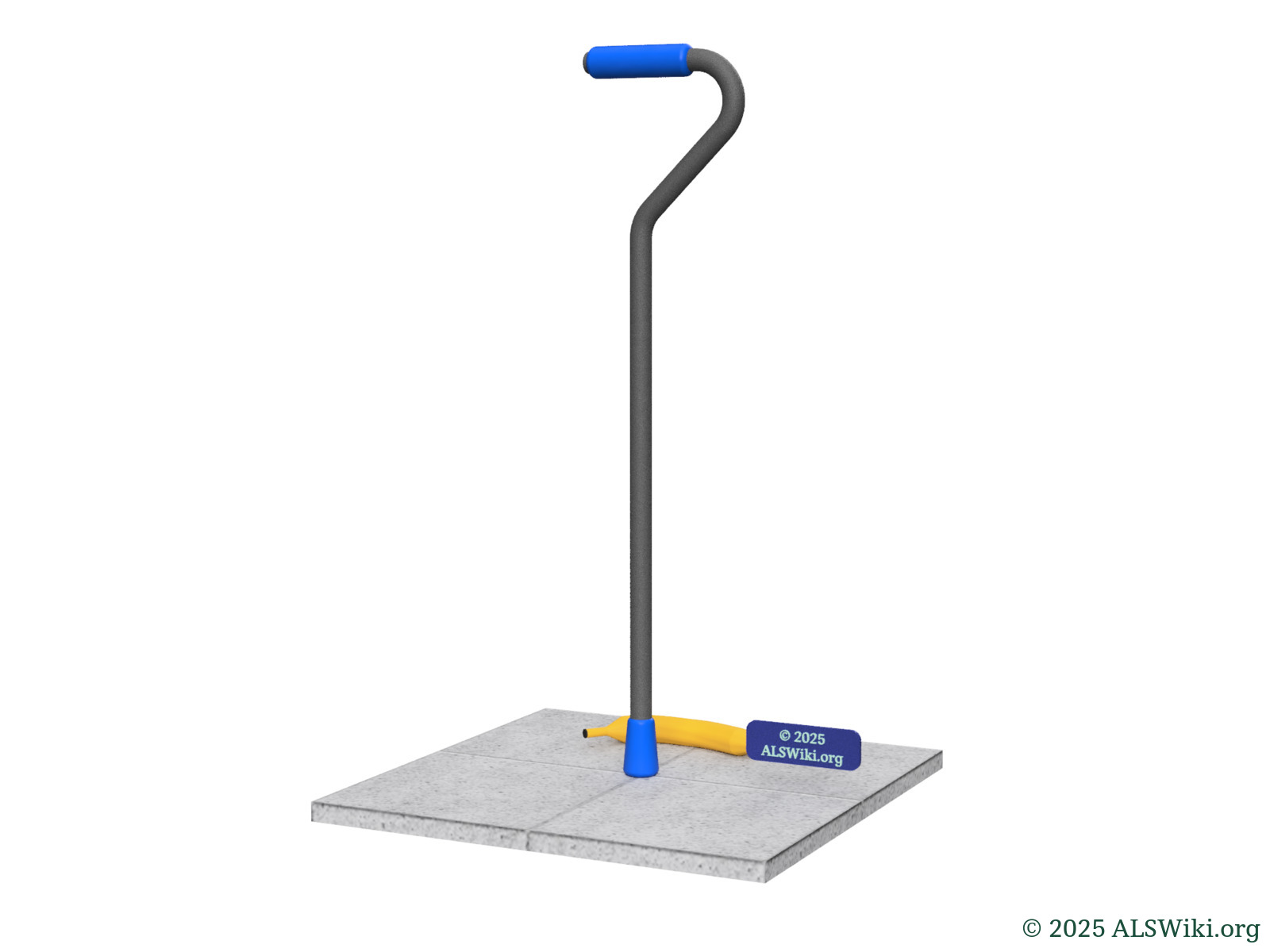
A typical cane.
¶ Start using when…
Still able to walk independently for moderate distances, but there are some minor fatigue and balance issues; grip strength is adequate

¶ Stop using when…
Fatigue sets in quickly, and balance issues are significant, even when using the cane; grip strength is insufficient
¶ Replace with…
Walkers › Wheelchairs ›An individual with ALS only benefits from a cane if they retain a moderate amount of grip strength. A larger cane grip is beneficial as it is easier to hold. The cane may slip out of the hand if it is not gripped firmly, which could cause a fall.
A walker or wheelchair becomes appropriate when a cane no longer provides adequate support, or when it is not possible to hold it firmly.
¶ Crutches
🚧
¶ Walkers
A walker, or rollator, is a mobility device used to aid with walking. Individuals with ALS typically use these when walking independently has become difficult, before eventually using a wheelchair.
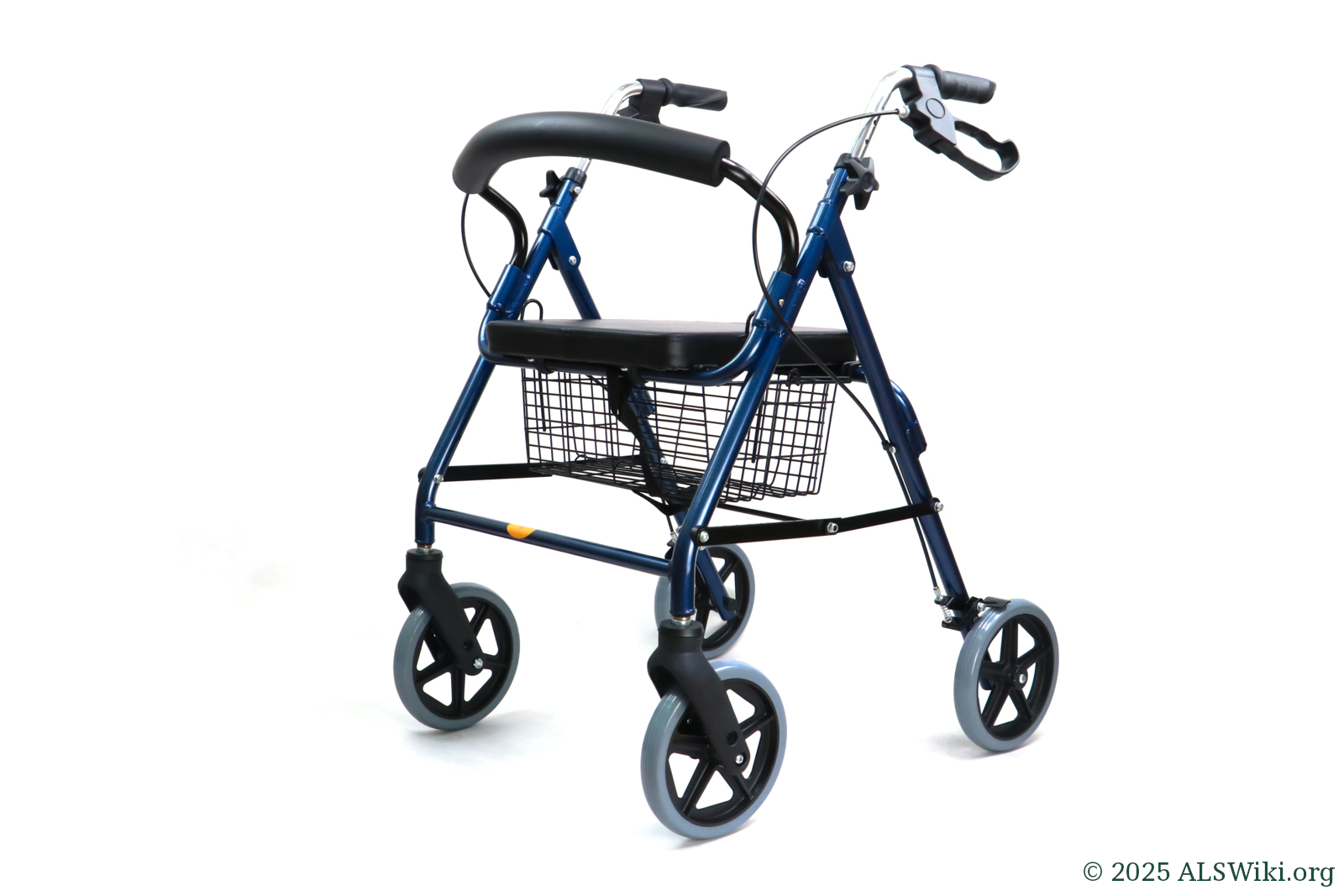
Walker with integrated seat.
¶ Start using when…
Still able to stand without help; arm and grip strength are adequate to control the walker
¶ Stop using when…
No longer able to take steps when using the walker; it has become merely a support for standing
¶ Replace with…
Wheelchairs ݦ Types
Walkers come in different types, and have a wide variety of different designs. The two main types are:
-
lift-and-step, which are very lightweight and operated by placing them, taking a step, and then placing them further forward again
-
wheeled, which are typically much heavier, and are operated by pushing them along, like a shopping cart. Walkers of this type may be fitted with baskets, seats, and other accessories
Most walkers fold into a compact size for ease of transportation.
¶ Further Considerations
Avoid using a walker for longer than is appropriate. If walking has become very unstable, even with the assistance of a walker, consider using a wheelchair instead.
Individuals with ALS often operate walkers with the brakes still on, to prevent them from rolling away too quickly.
Multiple walkers may be needed in a home with multiple floors. Compact and lightweight walkers are still tedious to transport up and down stairs, even by an able-bodied assistant.
Seats fitted to walkers are only intended for use when sitting still; they are not intended for using the walker as a makeshift wheelchair.
Some tourist destinations, such as theme parks may ban the use of walkers that have integrated seats out of fear of abuse[1].
¶ See Also
¶ External Resources
¶ References
- "SeaWorld Orlando Accessibility Guide", Visit with Purpose: SeaWorld Orlando, San Diego & San Antonio, Retrieved 2025-12-16