¶ Introduction
Home assessment refers to evaluating a home for present and future needs of an ALS patient. The results of this evaluation will help determine if any home modifications are needed and will guide the decision to stay or move.
The most effective way to determine what adaptive equipment and accessibility modifications are required is to consult a qualified occupational therapist.
¶ Requirements
¶ "Planning for paralysis"
The home's suitability for an ALS patient should be evaluated from the perspective of paralysis. It is at this stage where the needs of the patient will be highest, and the home would need the largest number of modifications.
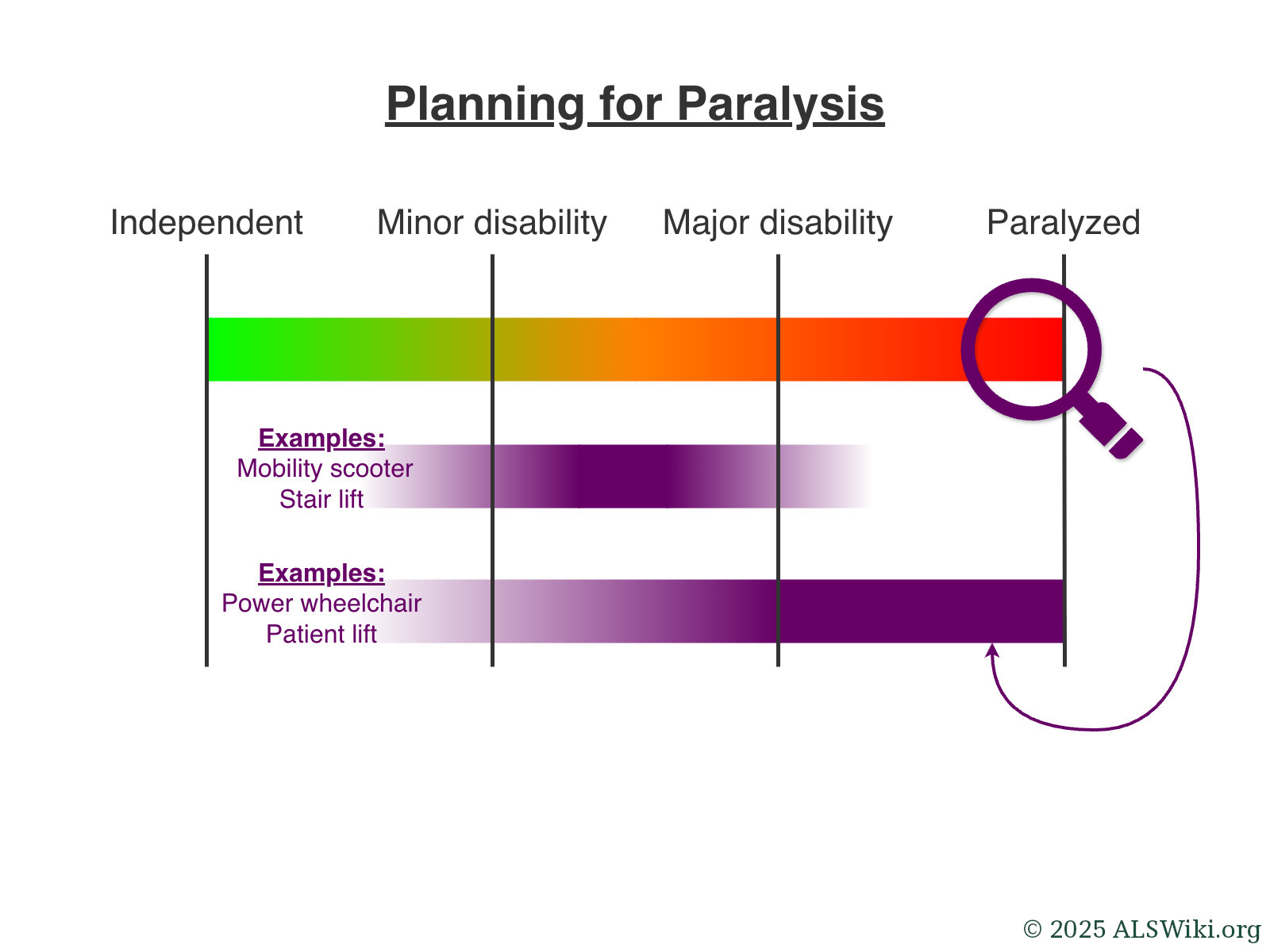
Planning for paralysis means analyzing from the perspective of the ALS patient having no physical independence. Adaptations made for paralysis are useful before they are truly needed.
Planning for paralysis, in the context of a home assessment, means assuming that the patient will be unable to walk or stand up, nor be able to operate equipment such as a stair lift independently or even with some assistance.
- Trips from room to room will be done using a wheelchair or wheeled commode chair
- Transfers will be done using a patient lift
Home modifications and adaptive equipment associated with intermediate stages of disability are justifiable, especially for patients with relatively slow disease progression and adequate access to applicable resources. Otherwise, they can be skipped in order to save time and expense.
Examples include:
- Grab Bars - useful when standing is possible with minor adaptation
- Stair Lifts - useful when it is still possible to get on and off of it
- Toilet Seat Risers - useful when standing is possible with minor adaptation
Some homes need very little modification to meet the needs of a paralyzed patient, while others may be found to be unsuitable to occupy in the near or distant future.
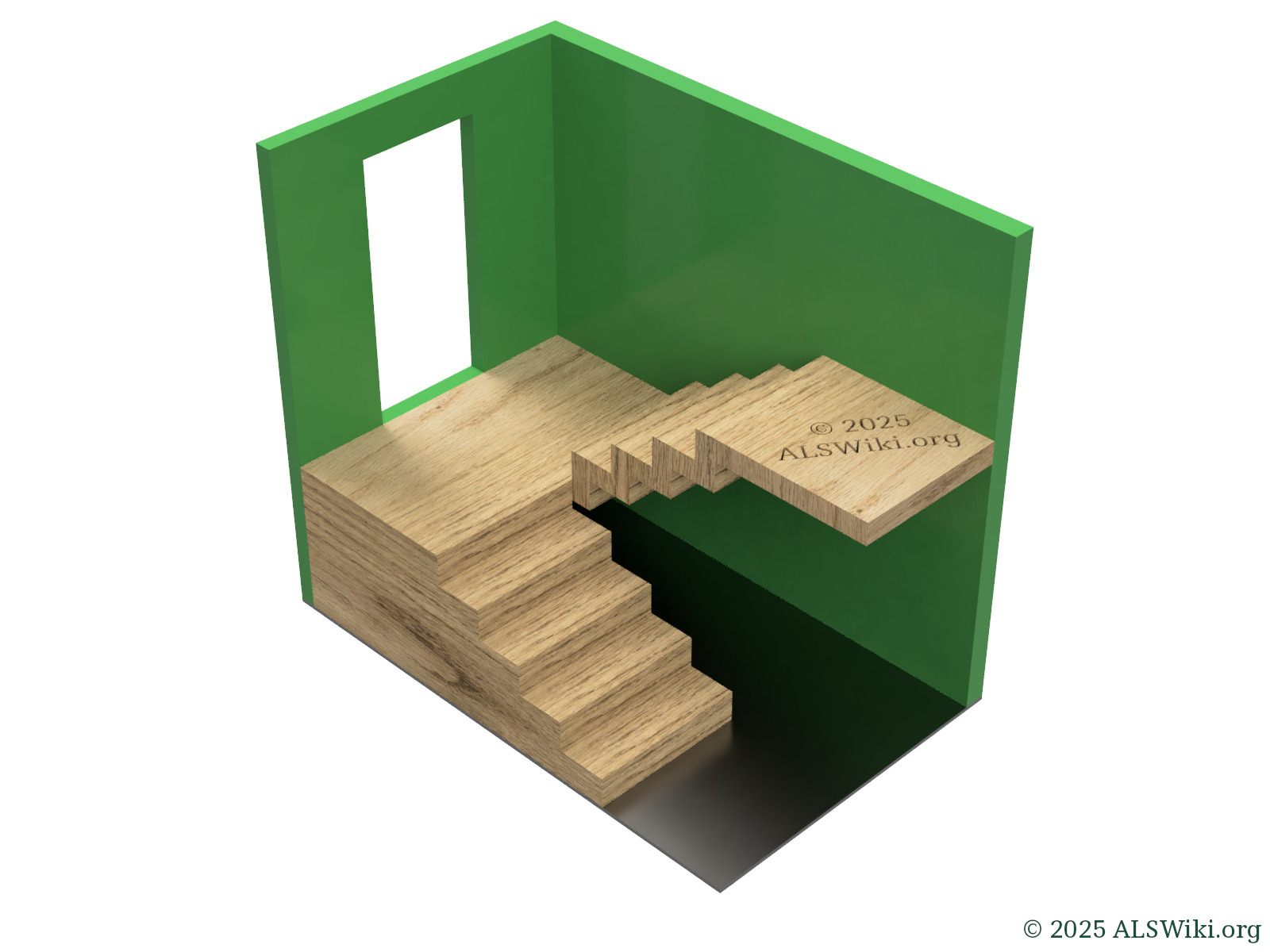
A split-level entrance like the one pictured here would be very difficult or impossible to suitably modify for a paralyzed patient.
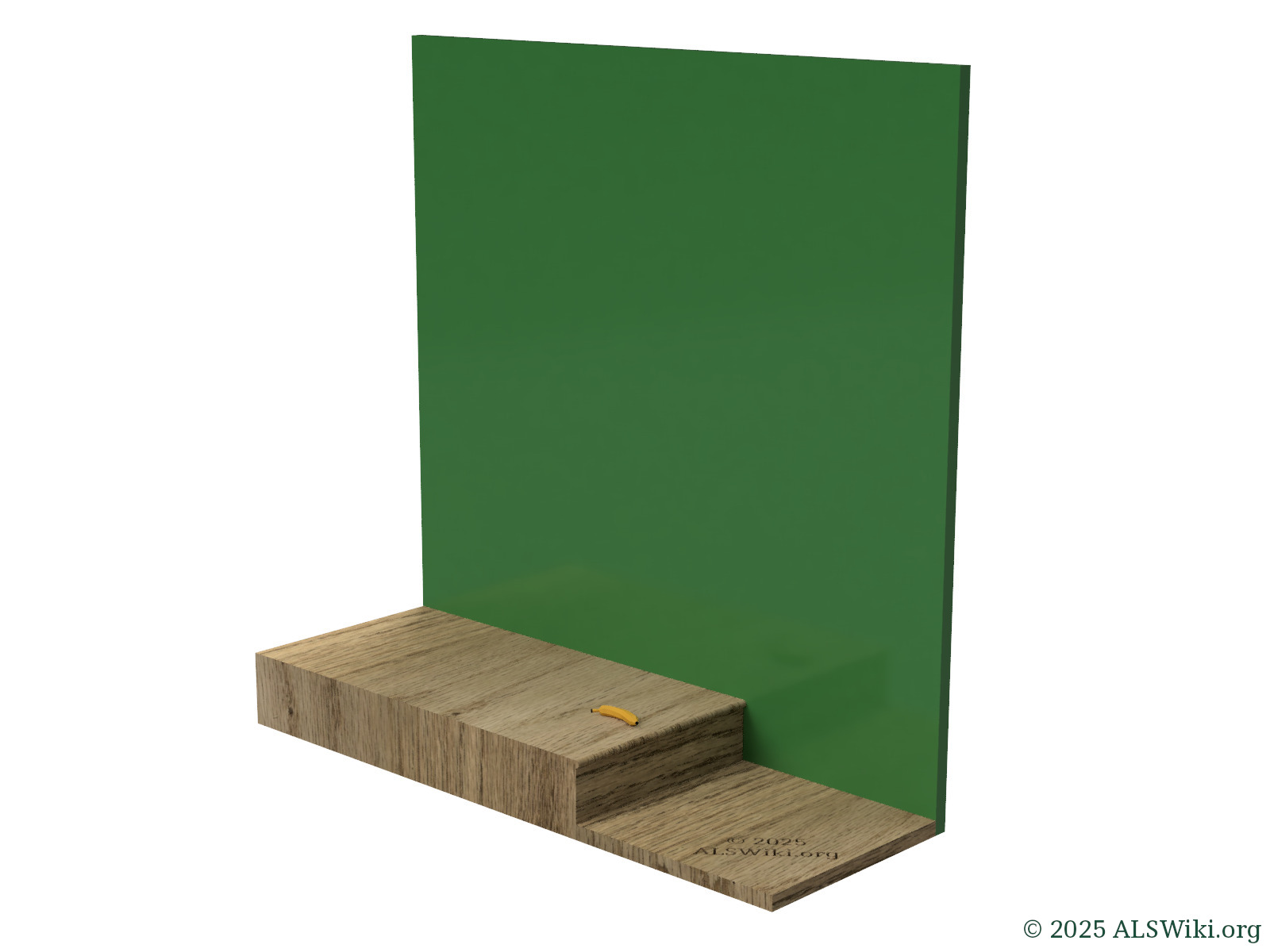
Even a single interior step will require a long ramp.
¶ Mobility
The assessment should determine what is needed for the ALS patient to be able to move from the outdoors to the indoors, and then between the following spaces within the home:
- entryway
- toilet
- bathing area
- sleeping area
- dining area
- living area
It may also be desirable to be able to navigate to other areas, such as decks and balconies.
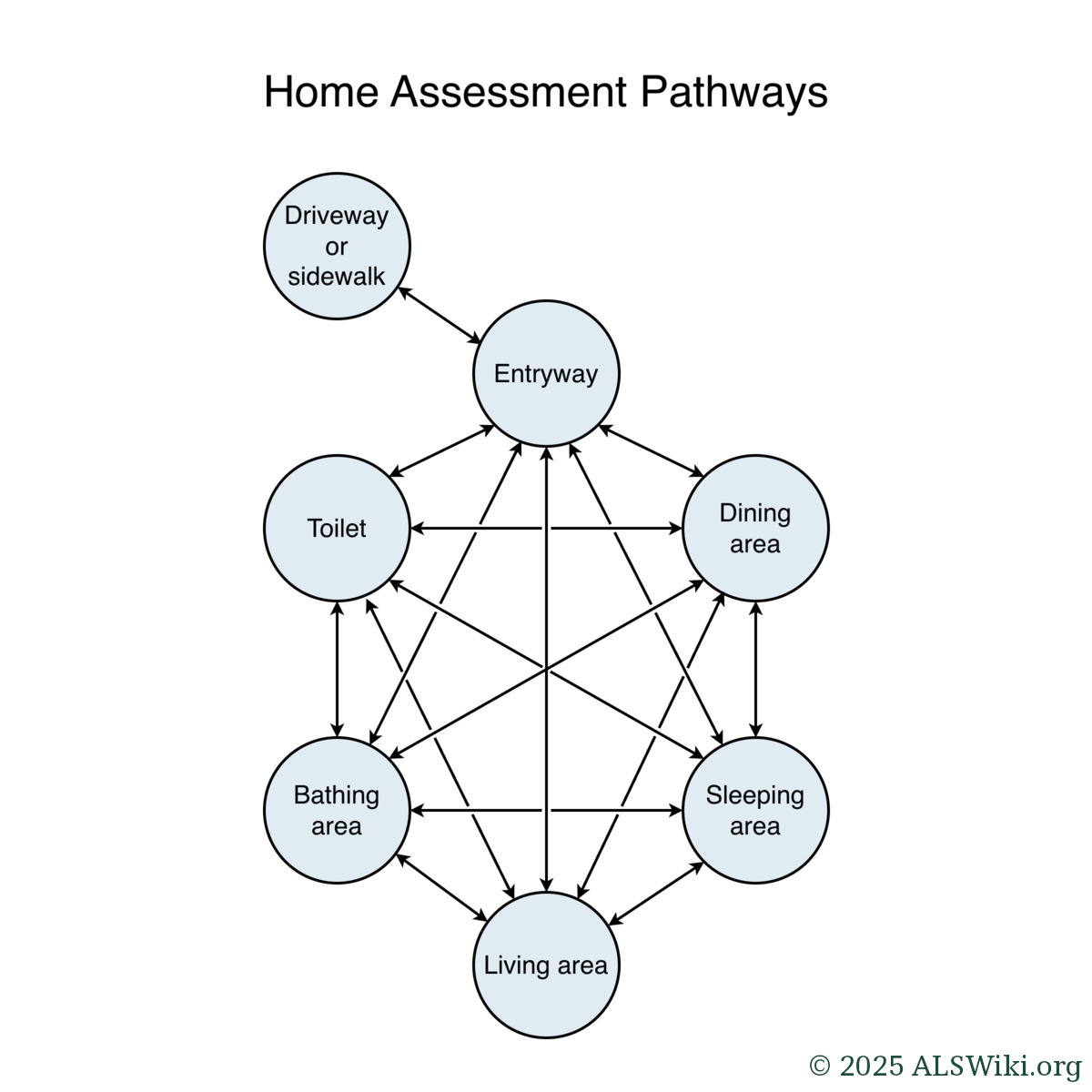
Diagram: home assessment pathways. It should be possible to navigate from any area of the home to another.
¶ Procedure
Each pathway applicable to the home should be evaluated one by one, and along the way, taking note of the following:
- how the patient will make each part of the journey (e.g. patient lift, wheelchair, etc.)
- what obstacles are in the way of making the journey when using that piece of equipment
- what adaptive equipment or home modifications are needed to overcome the obstacle that has been encountered
¶ Home Features
¶ Entryways and Access
The path from the outdoors to the main floor is one of the most important considerations when evaluating a home for its suitability in housing someone that uses a wheelchair.
The elevation difference between the outdoor level and the main floor is the cumulative height of all stairs, thresholds, inclines, or other variations. The larger this total elevation change, the greater the length needed for a wheelchair-accessible ramp with a gradual slope.
¶ Stairs, Steps, and Thresholds
Many homes and other buildings have one or two steps to ascend between split level flooring. Ramps would still be required for even a single step when passing over it with a wheelchair.
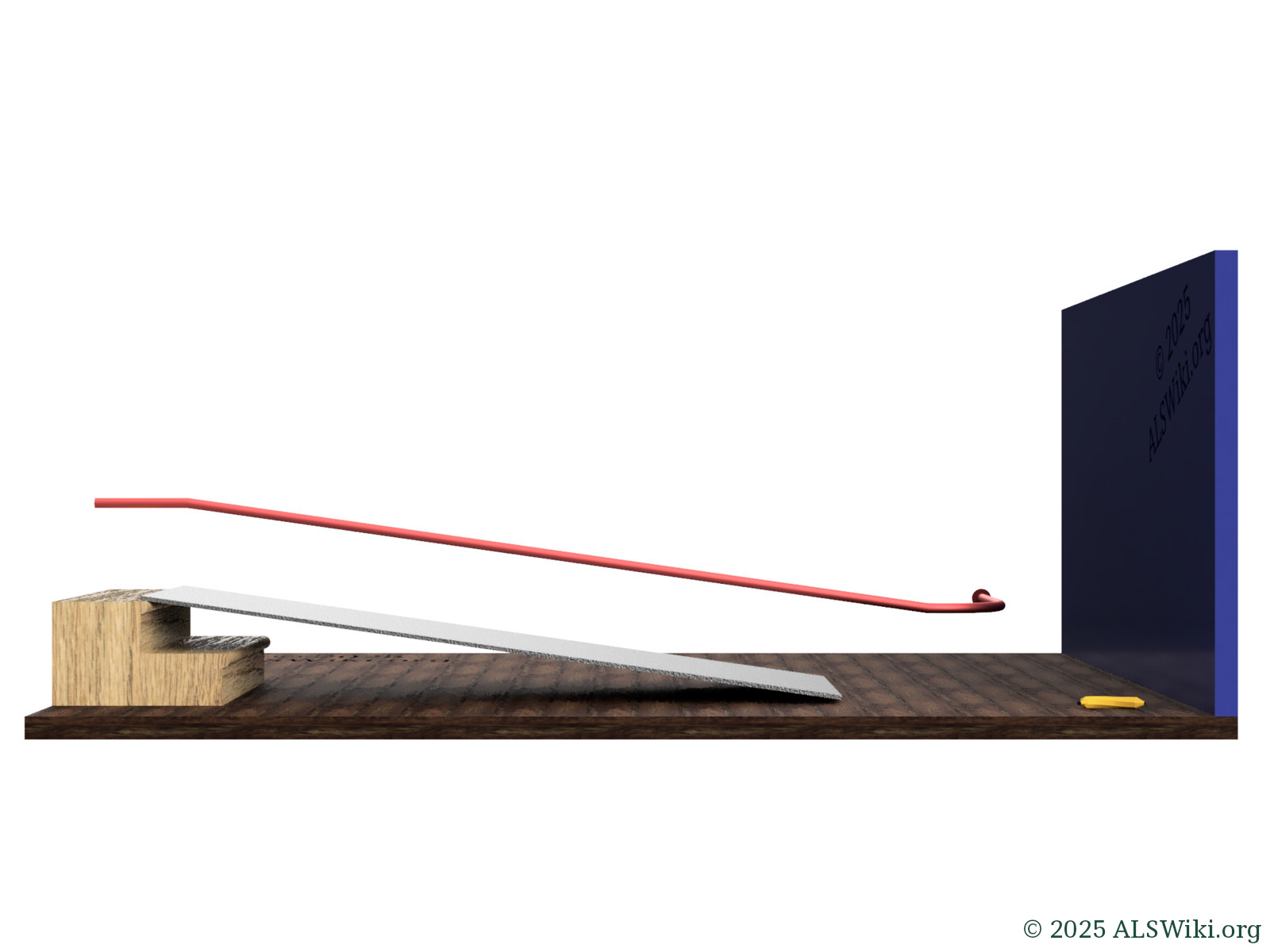
Even just two interior steps requires a very long ramp, plus a landing area at the bottom.
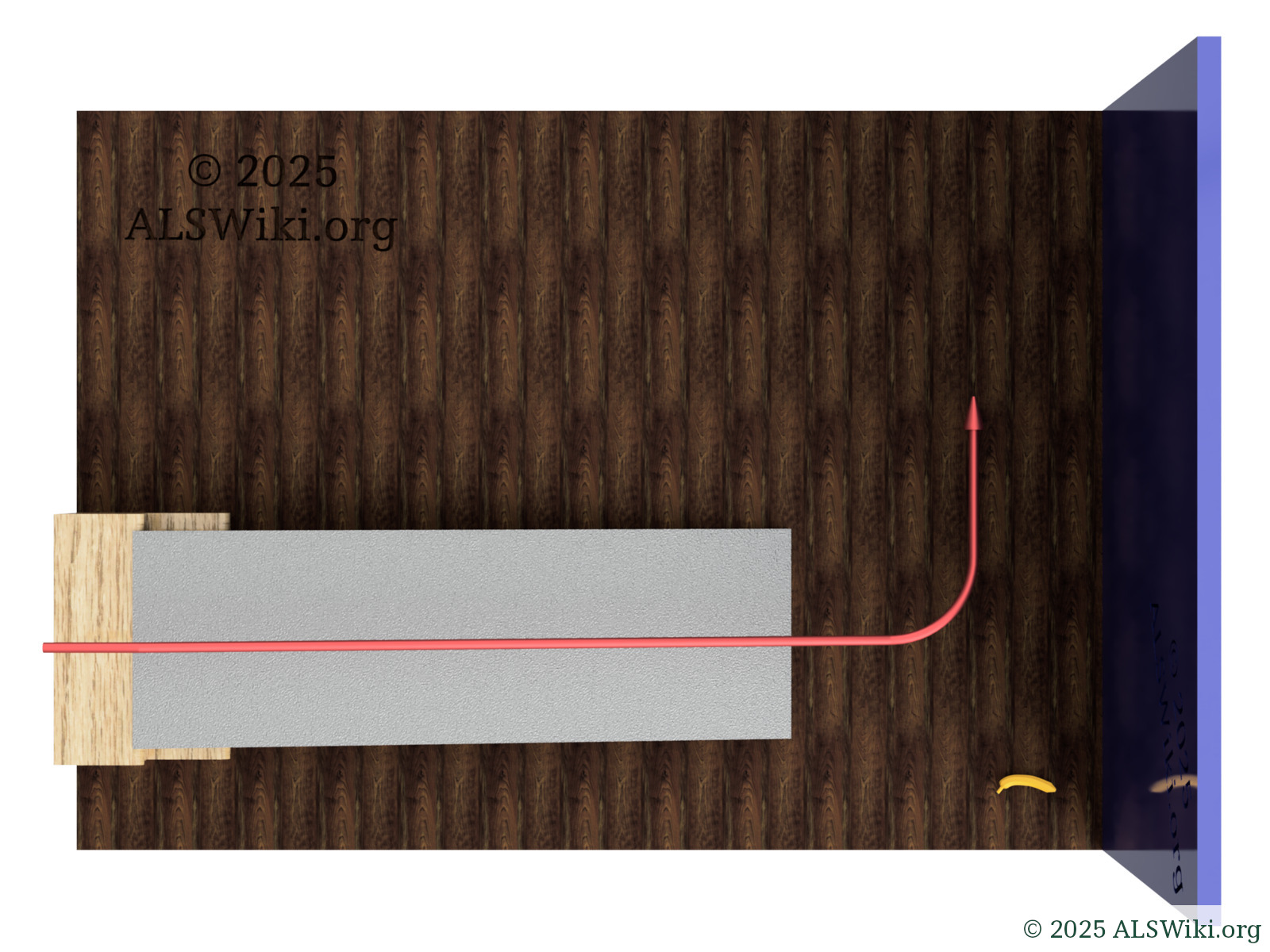
Alternate view of interior ramp used on two steps.
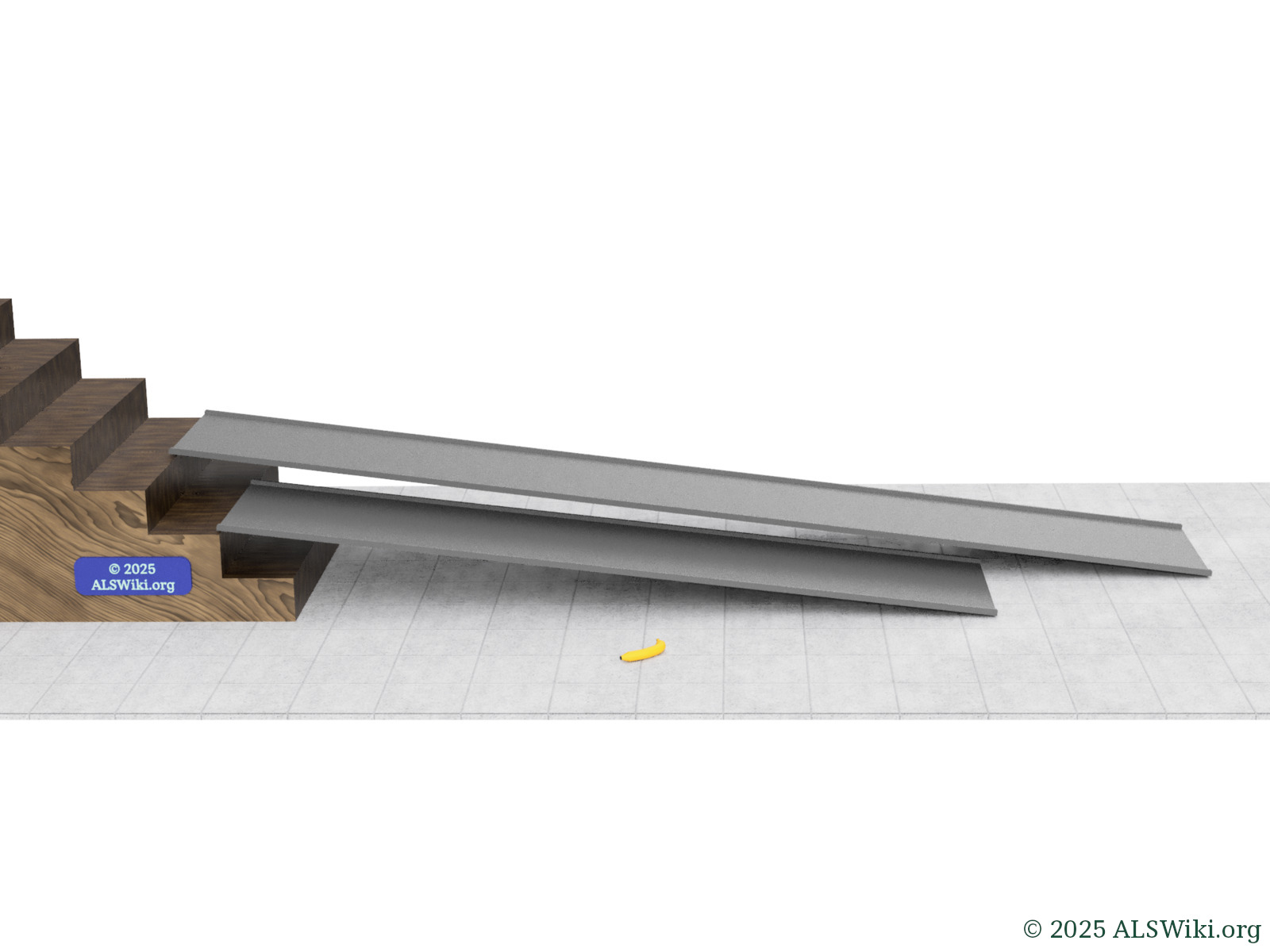
Comparison of the ramps needed for two steps and three steps.
Both ramps have an incline of approximately 1:8, which is steeper than ADA recommendations.
The short ramp is 10 feet long. The long ramp is 14 feet long; about as long as ramps of this type get.
A threshold is a piece of material that forms the bottom of a doorway, or a transition between different floor surfaces. Thresholds can be difficult to traverse for a person walking or a wheeled device such as a wheelchair. Care should be taken when crossing thresholds, as with staircases and steps.
Thresholds as shallow as 1/2 inch (12 mm) may require the use of a threshold riser to safely traverse them.
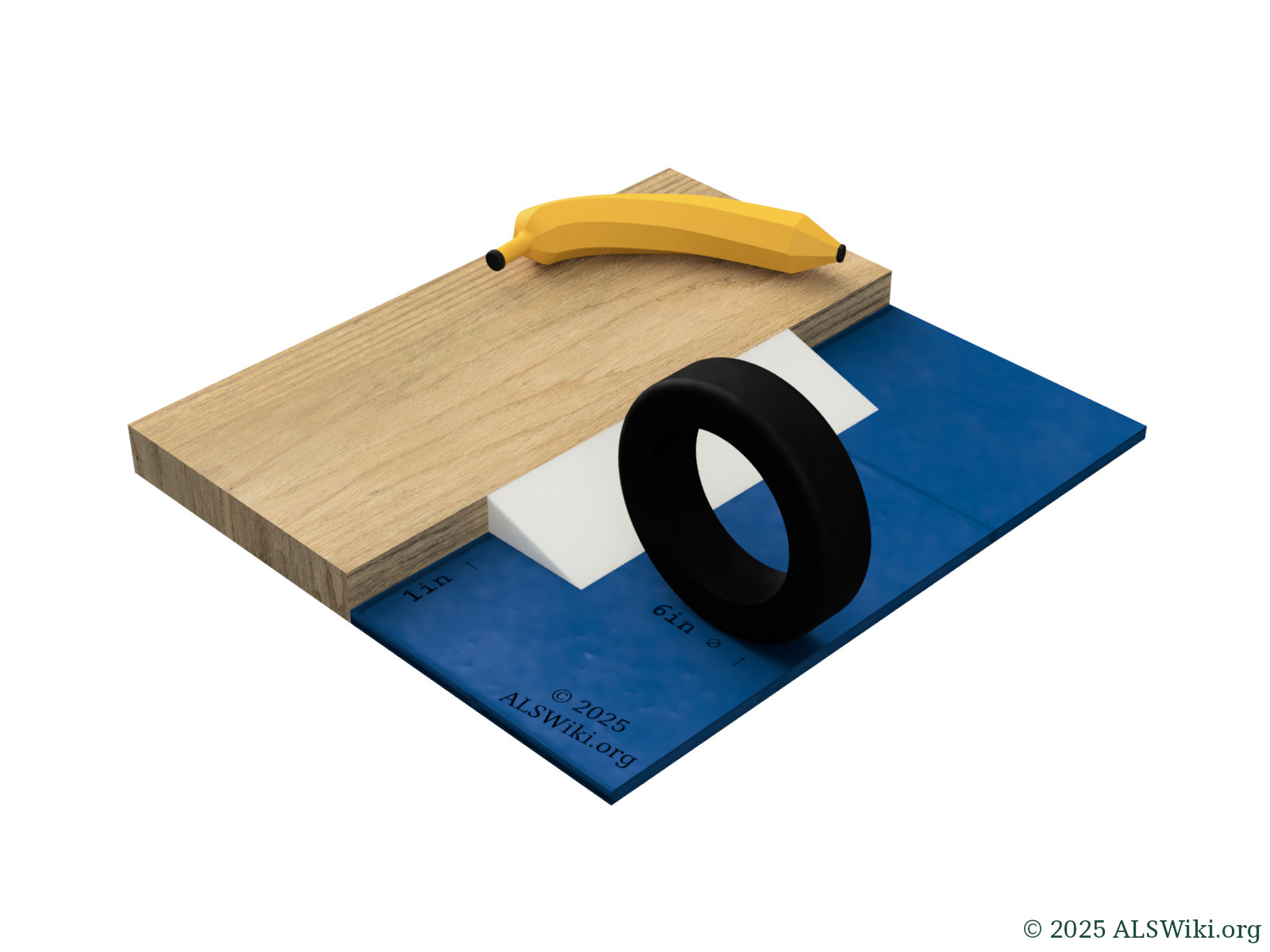
6-inch (15 cm) wheel going over a white threshold riser. Banana for scale.
¶ Flooring
Flooring should be free of protrusions, gaps, or damage.
Floor lifts are only suited for use on smooth, flat flooring surfaces, such as hardwood, linoleum, or extremely low-pile carpet, such as that found in commercial buildings.
¶ Rooms and Hallways
Any room or hallway that is part of a journey within the home must be big enough for whatever adaptive equipment is being used, such as a wheelchair or wheeled commode chair.
¶ Doors
Doorways must be wide enough for a walker, wheelchair, or wheeled commode chair to pass through. Often, the door itself reduces the effective width of the doorway when the door is open. Measurements of applicable doorways should be made before purchasing equipment that is intended to pass through them.
Door knobs with a circular profile can be difficult to grasp and rotate for individuals with muscle atrophy in their hands and forearms. Knobs which have a prominent handle that can be pushed downward are easiest to operate. Knobs which lock may be impossible to operate if they require the use of fingers to operate the locking mechanism.
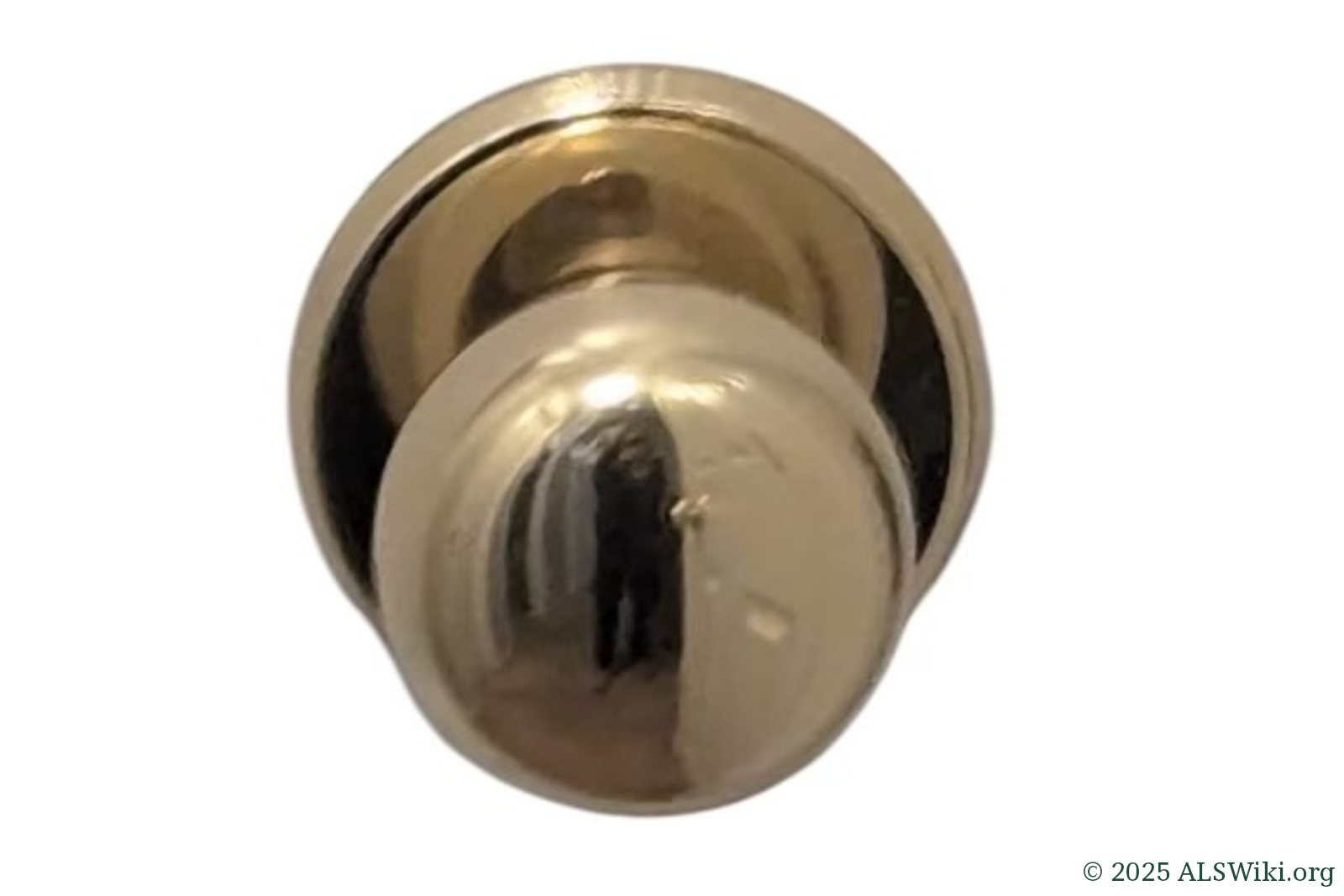
Round door knobs are difficult to turn as they require pinch and grip strength. This is especially true if they have a smooth surface like the one shown.
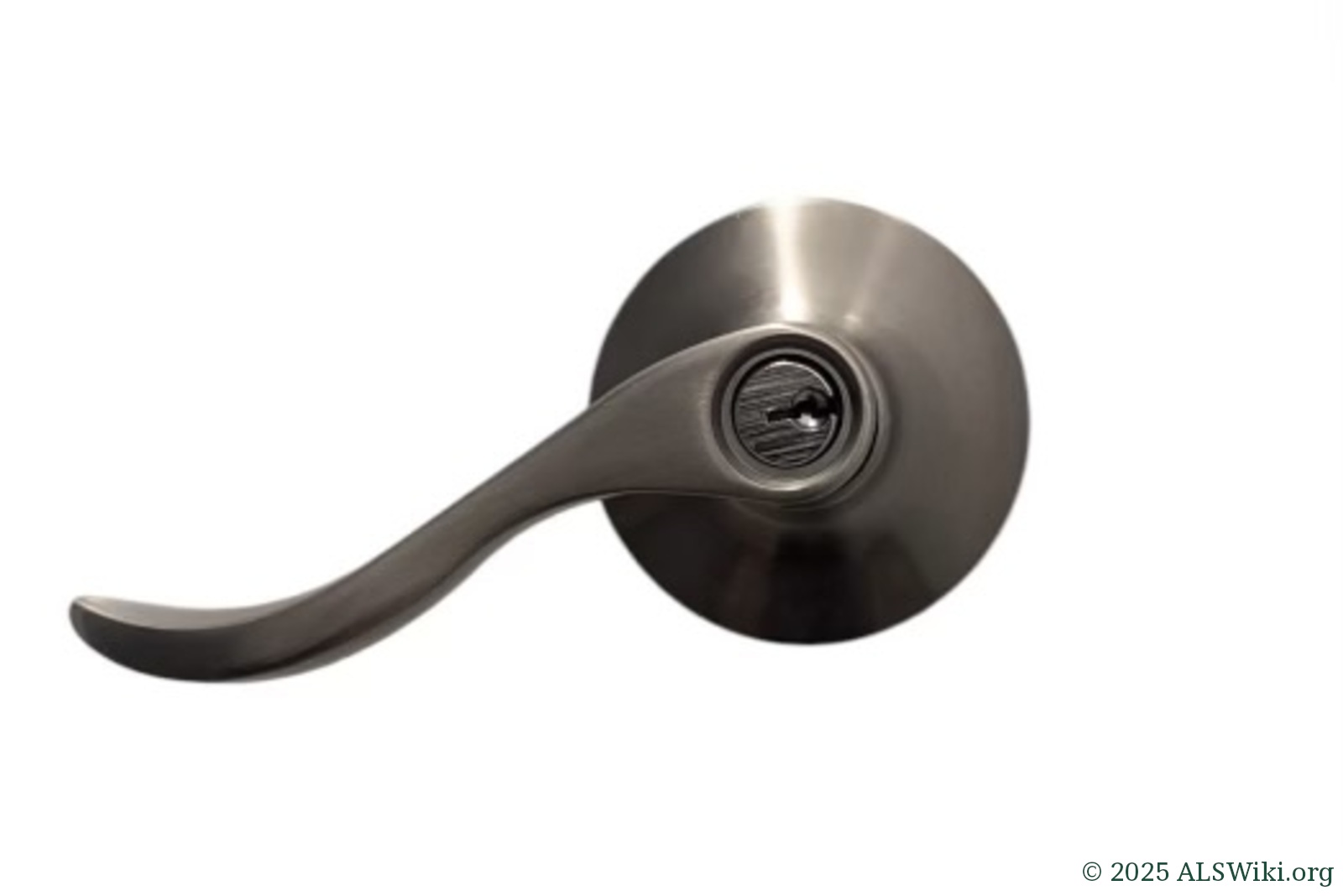
Door knobs with prominent handles are easy to operate, as they only need to be pushed down upon.
¶ Decks and Balconies
Sliding doors used to access decks and balconies may be too narrow for a wheelchair or a walker to pass through. Modifications to the door handles may allow for some valuable increased opening width in some cases. Many sliding doors in North America have a standard overall width of 5 feet, or 6 feet. 5-foot models will almost definitely need modifications to provide clearance for a large wheelchair.
Sliding doors also have a threshold on the bottom that must be cleared. Commercially available products exist that make going over the threshold much smoother. A ramp is placed on either side of the door, and a removable bridge is placed between them when passing through the door.
A power wheelchair with the patient sitting in it may weigh as much as 750 pounds (340 kg).
¶ Examples
Example 1: getting from a bed to a toilet
| Location | Problem | Solution |
|---|---|---|
| Bed | Must get out of bed | Use a ceiling track lift to get from bed to a wheeled commode chair |
| Wheeled commode chair, in hall | Steep threshold between hallway and bathroom floors is difficult to push the commode chair over | Installation of threshold riser |
| Wheeled commode chair, over the toilet | Bathroom door doesn't close | Replacement of the door with a pocket door or privacy curtain |
| Checklist: Adaptive Equipment |
|---|
| Ceiling track lift |
| Wheeled commode chair |
| Threshold riser |
| Checklist: Home Modifications |
|---|
| Ceiling track lift installation |
| Threshold riser installation |
| Pocket door or privacy curtain installation |
¶ Renovations
A home that is unsuitable for late stage ALS in its present condition may be able to be renovated to solve whatever issues have been encountered. Examples include:
- adding a large bathroom to the main floor
- modifying an existing bathroom, especially the shower
- replacing deep-pile carpet with hardwood or another surface suited to the use of a floor lift
- moving or widening a doorway
- removal of non-load bearing interior walls to provide a larger living space
- installation of an outdoor ramp to make it possible to enter and exit the home using a wheelchair
- installation of an elevator
The cost and time required for home renovations should not be underestimated. In particular, accessibility modifications such as installing ramps, stair lifts, or accessible bathroom equipment can be expensive and disruptive to complete. Not all contractors are interested in such work; it may be necessary to track down a contractor that specializes in the modifications to be made.
Further, some accessibility renovations, such as outdoor wheelchair ramps may reduce the home's appeal to future buyers. On the other hand, expanding a bathroom or installing a zero-barrier shower may improve the overall appeal of the home.
¶ See Also
¶ Living with ALS
¶ Adaptive Equipment
- Elevators and Platform Lifts
- Patient Lifts and Slings
- Ramps and threshold risers
- Shower Chairs and Benches
- Stair Lifts
- Wheelchairs
Newly Diagnosed with ALS
Article Collection